Deep Dive · New Orleans
The Po'Boy Is a Canvas: Inside Louisiana's Creative Sandwich Revolution
Pop's Poboys in Lafayette builds everyday icons like the Surf & Turf — proof the po'boy can live way outside the fried-shrimp-on-bread standard — in a Louisiana-wide reinvention running from Banh Mi Boys' Vietnamese crossover to NOLA Poboys' bisque-smothered Who Dat to Killer Poboys' Michelin-recognized rum-glazed pork belly. Plus the Leidenheimer and Dong Phuong bread underneath it all.
Get more of The Pass in Google
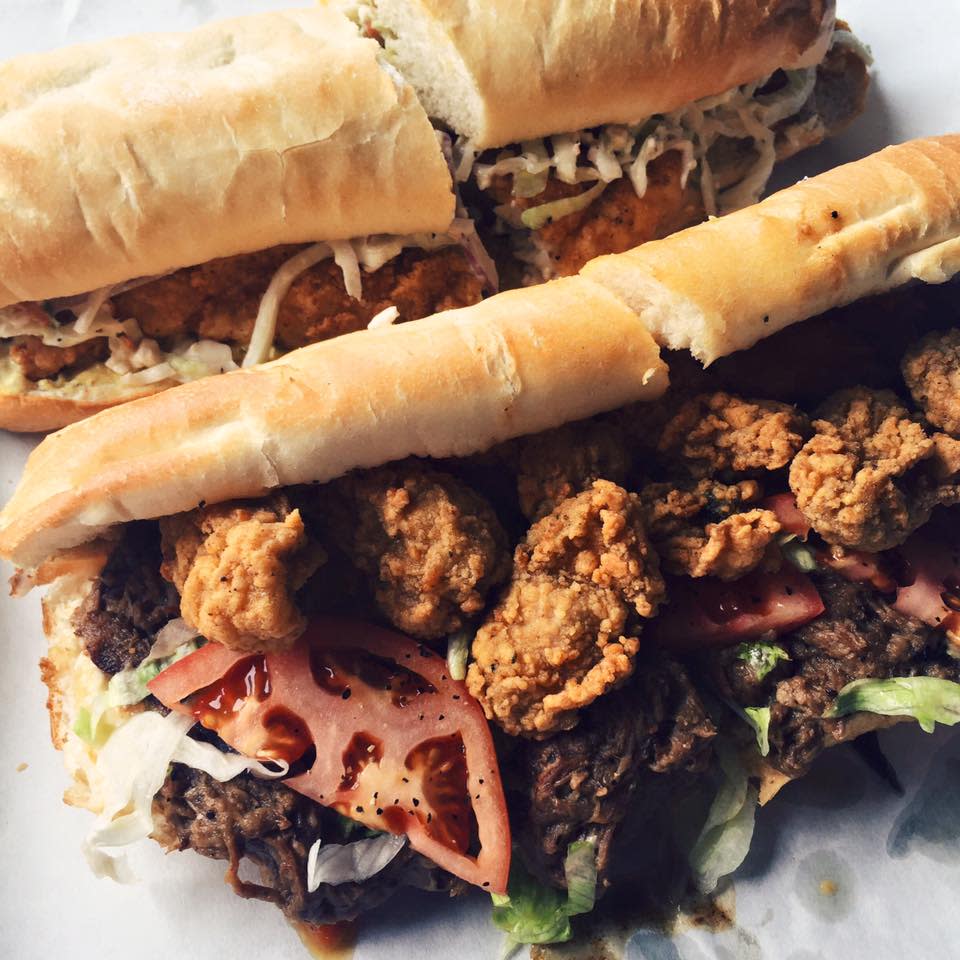
Ask a chef to name the best sandwich in the world and an uncomfortable number of them will say the po’boy. Not the cheesesteak, not the banh mi, not the muffuletta — the po’boy. And rightfully so: no other sandwich gives a kitchen this much room to move: a loaf built to hold anything and a format with no rules beyond “make it fit in the bread.”
Right now, Louisiana is in the middle of a po’boy reinvention. In Lafayette, Pop’s Poboys builds everyday icons like the Surf & Turf — debris roast beef and a crispy Gulf oyster under horseradish peppercorn sauce — proof that a po’boy shop can live way outside the fried-shrimp-on-bread standard. In New Orleans, Killer Poboys carries a Michelin Selected nod from the guide’s inaugural American South edition — for sandwiches served out of a bar back room. Between those poles, a Vietnamese crossover shop and a Bourbon Street smother joint are stretching the form in opposite directions.
The po’boy is a canvas. These are the four shops painting on it right now.
Pop’s Poboys: Not Just Fried Stuff on Bread
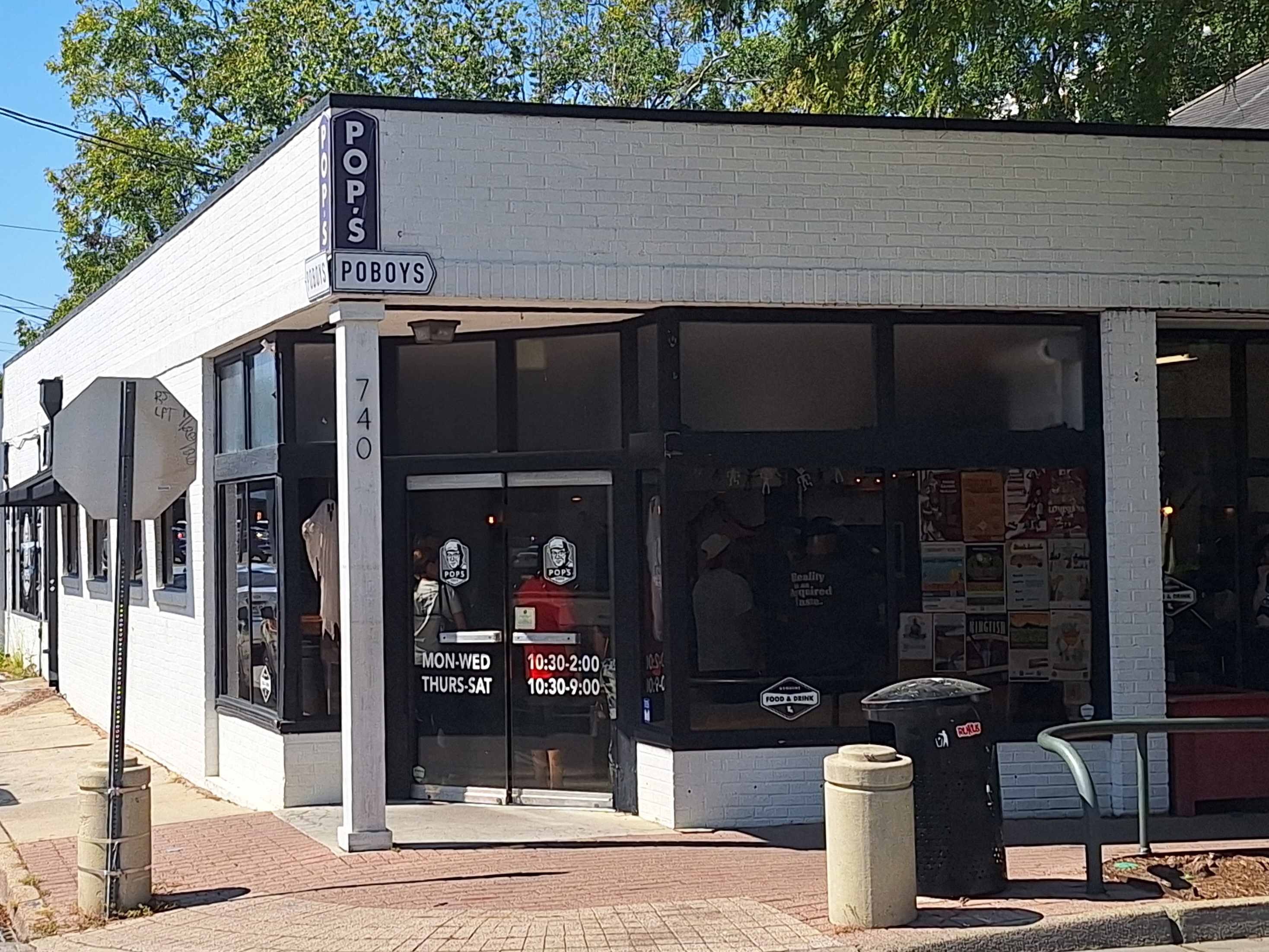 Photo: Google Maps / Street View
At Pop’s Poboys, the everyday menu is the argument — a full board of builds that treat the po’boy loaf as a launchpad. Start with the Surf & Turf: debris-style roast beef and a crispy Gulf oyster under horseradish peppercorn sauce, with lettuce and tomato. The debris brings deep, gravy-rich savor; the oyster brings the crunch; the horseradish cuts straight through both. It is land and sea on one loaf, and it only exists because a chef is in the kitchen.
Chef Collin Cormier opened the shop at 740 Jefferson Street in downtown Lafayette in April 2015, naming it for his great-grandfather “Pop,” and built it on a simple heresy: the po’boy is a canvas, not a formula. Most Louisiana po’boy shops live on three moves — roast beef debris, fried shrimp, fried oyster — dressed or undressed. Pop’s serves those, but its celebrated items are the ones that walk right past the fried-seafood-on-bread playbook.
Take the Delcambre Dandy, a nod to the Acadiana shrimping town of the same name: crispy Gulf shrimp taken out of the dressed-shrimp uniform and served over arugula and tomato with a tart lemon caper sauce. The peppery greens and the acid do the work that tartar sauce usually does, and the whole thing reads more coastal trattoria than fry shack. Or the Hot Hot, a Nashville-style hot fried chicken po’boy with Blue Plate mayo, dill pickles, and green onion buttermilk ranch, served with its own warning — “Yes!! It’s Hot!” — and earning it. The cayenne crust blooms against the cool ranch and the pickle’s acid; the heat is the point. The Banh Banh Shrimp grills its shrimp instead of frying them, then folds in chili garlic mayo, pickled carrots, cucumber, and cilantro. The Red Bean Falafel — red bean and chickpea fritters with cayenne tzatziki and tahini — is a vegetarian po’boy that would headline anywhere it existed; at Pop’s it is just Tuesday lunch.
Then there is the deeper bench. The Cajun Castro stacks Cajun roast pork, ham, and Swiss with smothered greens, fried pickles, and Creolaise — a Cuban sandwich filtered through Acadiana, the smothered greens standing in where you would expect mojo. The Cardiac Cajun — crispy Gulf shrimp in cane-pepper jelly under crawfish-boiled sausage with melted pepperjack — is the maximalist of the bunch: sweet heat from the jelly, smoke from the sausage, unapologetically Cajun-country. The Darlene simmers meatballs in stew gravy. The Jack Special piles turkey, ham, and debris roast beef under smoked Gouda like a club sandwich that wandered into the wrong parade. The Big “Frite-a” is Pop’s take on the French fry po’boy: house-cut fries, gravy, smoked Gouda, and Blue Plate mayo. The Boudreaux dresses buttermilk fried catfish in pickled okra tartar sauce and blue cheese coleslaw. There is even a burger — a salt-and-pepper patty with American cheese, dill pickles, lettuce, tomato, and Blue Plate mayo, served medium unless requested otherwise. Every build is a decision.
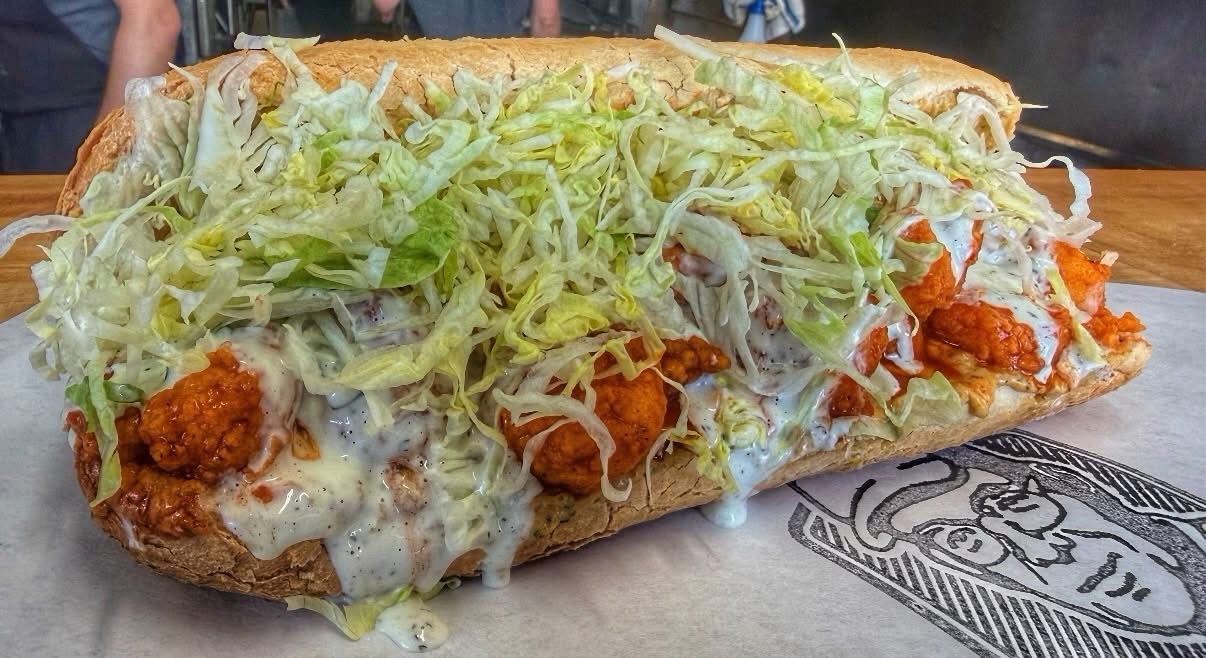 Photo: @popspoboys
The rotating weekly special — lately the Saucy Boy, crispy Gulf shrimp with remoulade, ranch, and Bulliard’s buffalo sauce — keeps regulars checking in, but it is seasoning on the story, not the story itself. Bon Appétit’s editors noticed a decade ago, naming Pop’s one of America’s 50 Best New Restaurants in 2016, and the shop has spent every year since proving them right.
Pop’s is in Lafayette, about two hours west of New Orleans, and yes, it is worth the drive. Go for the Surf & Turf. Stay for the menu.
Banh Mi Boys: The Po’Boy Goes Vietnamese
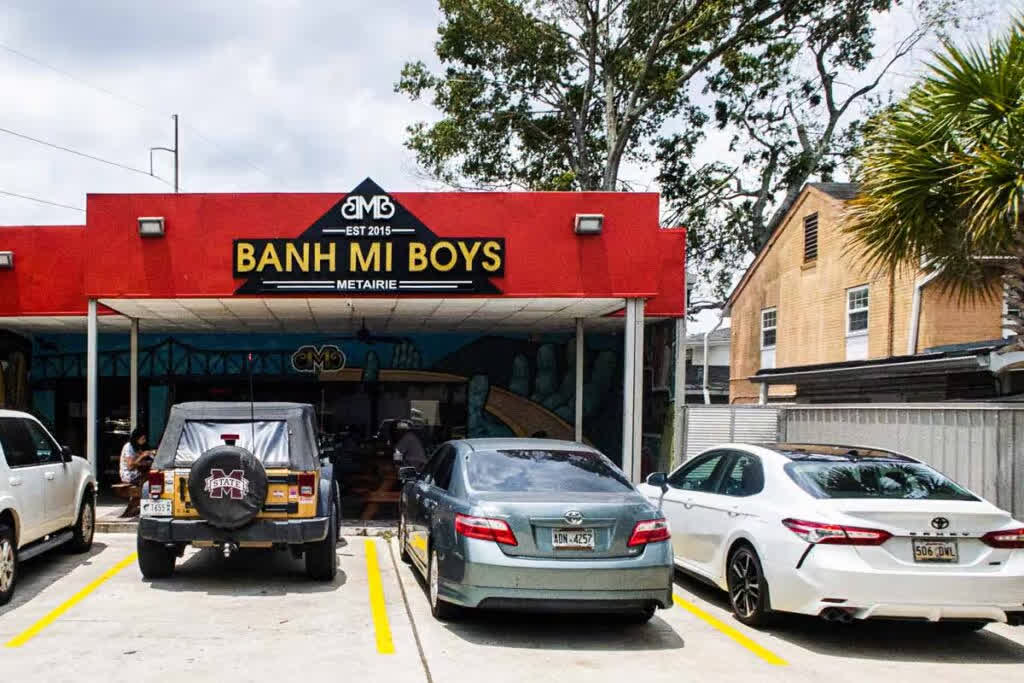 Photo: 2foodtrippers.com
Peter Nguyen was 26 when he opened Banh Mi Boys next to his parents’ Texaco station on Airline Drive in Metairie, and his premise was that New Orleans’ two great French-bread sandwiches were already kin. On the shop’s back patio, a mural shows the Golden Bridge of Da Nang merging into the Crescent City Connection, the banh mi on one side and the po’boy on the other. “Together, it makes ‘banh mi boys,’” Nguyen told Country Roads Magazine. “It’s symbolic of bridging both cultures together.”
His parents, originally from Vietnam, were skeptical of him pairing fried shrimp with cilantro and pickled daikon. “It’s kind of hard for them … to take a stab at touching something so deep within the culture that has for years been the same way,” he said. Parkway’s Justin Kennedy put the culture clash bluntly: “If you put hoisin sauce on a roast beef sandwich, people throw it back at you.” Nguyen did it anyway, and the shop now runs an Uptown room at 3244 Magazine Street, plus an announced Portland, Oregon outpost.
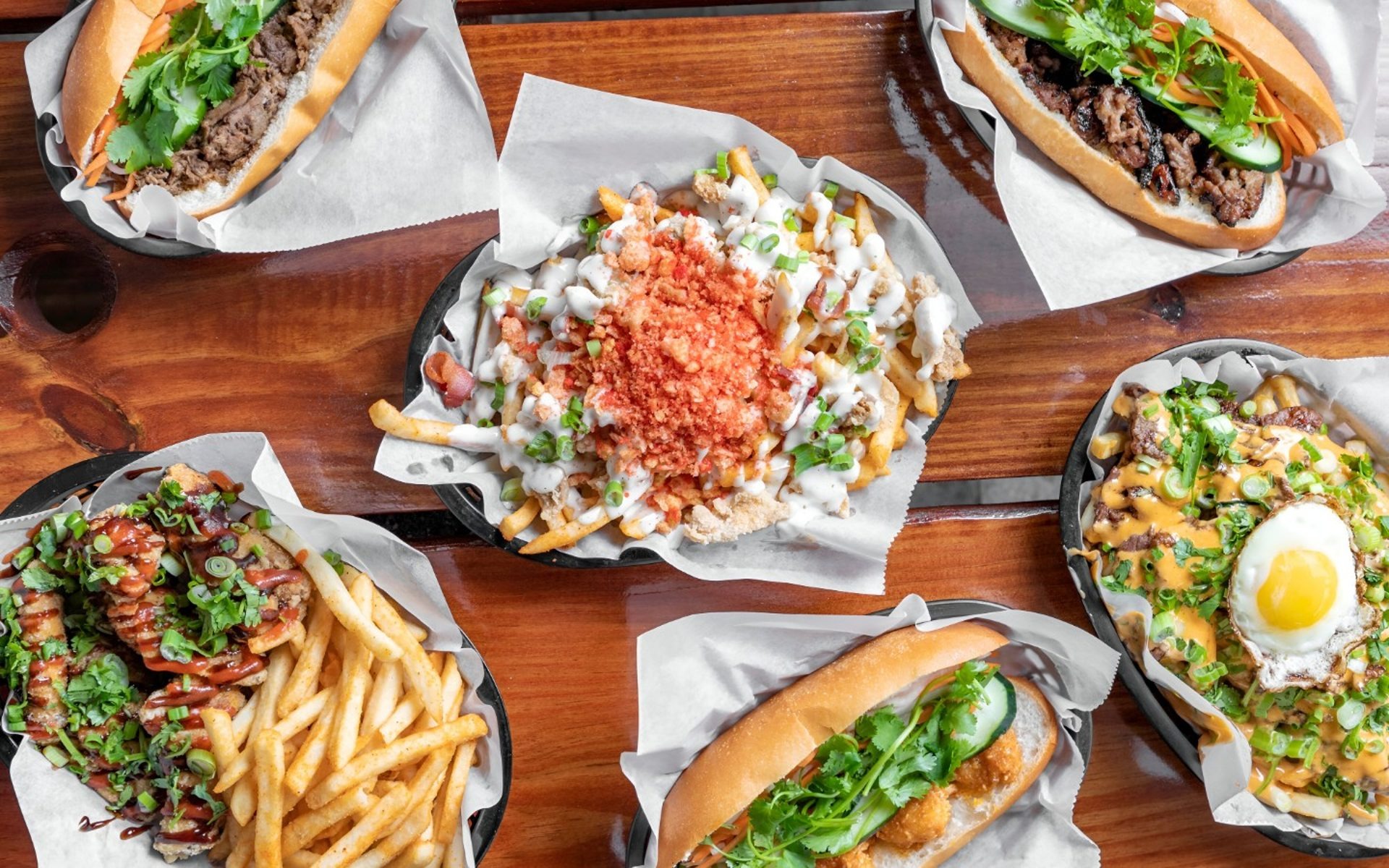 Photo: @banh.mi.boys.uptown
The menu reads like a single idea played in every key. The Bang Bang Shrimp Banh Mi takes fried Gulf shrimp tossed in a sweet Thai chili glaze and dresses it the banh mi way — pickled carrot and daikon, cucumber, cilantro, jalapeño, and house spread. The sweet heat of the glaze plays against the pickled crunch; it is the shop’s most-loved sandwich for a reason. “Nods to the poboy,” Country Roads noted.
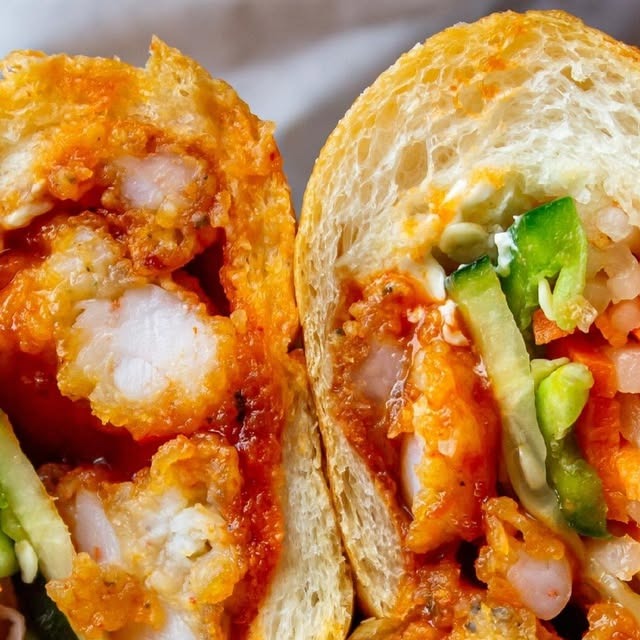 Photo: @banh.mi.boys.uptown
The Steak and Egg rebuilds bò né, the sizzling Vietnamese breakfast, as a sandwich: thinly sliced marinated chuck steak with caramelized onions, a sunny-side-up egg, and pork pâté. The Spicy Asian BBQ Brisket Banh Mi layers 24-hour smoked brisket with a spicy Asian BBQ sauce — low-and-slow smoke meeting bright banh mi dressing — and the Chicken Katsu runs panko-fried chicken breast with tonkatsu sauce, Japanese kewpie mayo, and furikake.
The depth keeps going: pork belly braised in a hoisin-rosemary sauce, Korean marinated beef with kimchi bits, chargrilled lemongrass pork, shrimp, and chicken thigh, fried chicken and tofu tossed in Korean dakgangjeong sauce, and smash burgers loaded with Bang Bang sauce and pickled carrot and daikon. On the sides: K-Town fries and oyster fries.
The bread split is the whole thesis, and Banh Mi Boys refuses to compromise on either side. Banh mi formats arrive on Dong Phuong baguettes; po’boys come on Leidenheimer French bread. The distinction matters because, as Nguyen and his peers argued in Country Roads, each bread specifically evolved to match the flavor of its ingredients — banh mi bread cannot be substituted for po’boy bread, or vice versa.
That’s the split from a standard po’boy room. The standard build is fried seafood or roast beef debris dressed with lettuce, tomato, pickle, and mayonnaise. Here, the po’boy format gets a second dressing tradition — pickled vegetables, fresh herbs, pâté, fish-sauce-driven mayo — plus a second bread bakery, Vietnamese technique, and a global pantry of bulgogi, katsu, and dakgangjeong. “I like to be creative in everything I do,” Nguyen said. “The banh mi is kind of like an empty canvas for me.”
Smother It in Bisque: NOLA Poboys Takes the Po’Boy Off the Plate and Into the Bowl
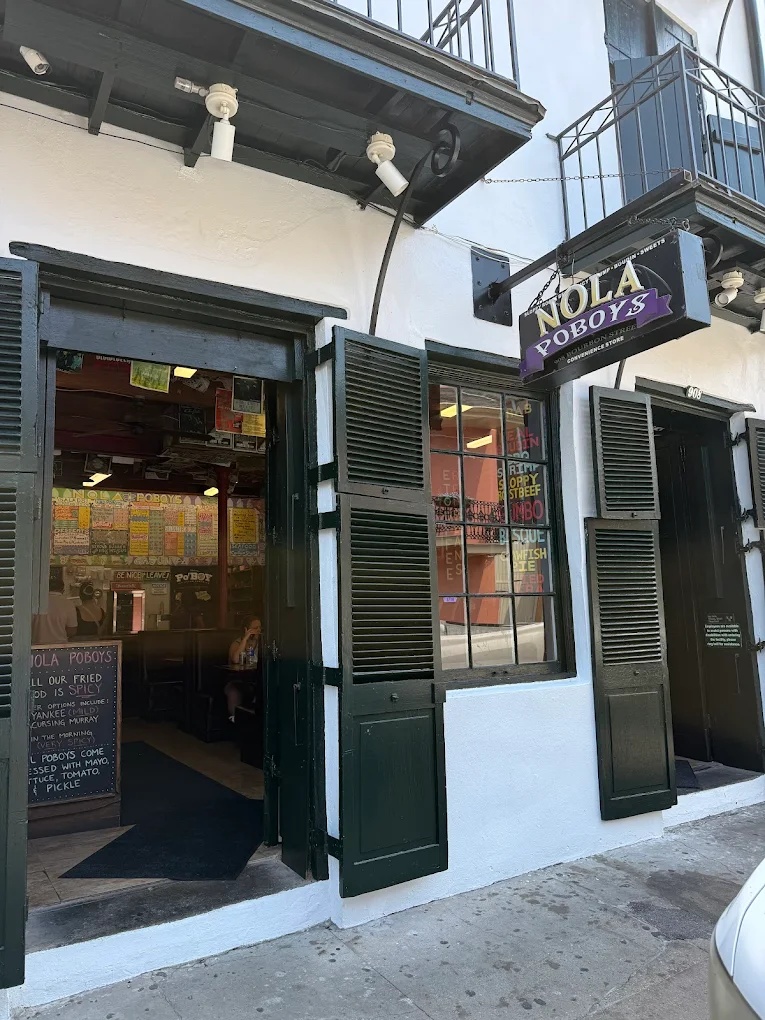 Photo: NOLA Poboys
Most shops in this city understand moisture as a finishing move. A roast beef po’boy gets its dark-brown gravy, a debris sandwich gets its drip, and the bread does the rest. NOLA Poboys — the family-owned counter at 908 Bourbon Street that has been slinging po’boys in the French Quarter since 1987 — went the other way. Here, the smother is the sandwich.
The signature is the Who Dat: fried shrimp, crusty and spiced from the fryer’s seasoning, loaded onto dressed French bread and then buried under a ladle of the shop’s crawfish and shrimp bisque. Not a drizzle. Not a finish. The bisque — rich, ruddy, and sold on its own for the people who come in just to drink it — turns the whole construction into fork food. The fried shrimp stay crisp at the edges where the bisque hasn’t reached yet, then give way at the center where the bread has gone soft and oceanic, and the napkin count climbs with every bite. A local reviewer once summed up the shop’s philosophy as “the messier the sandwich, the better,” and the Who Dat is the evidence.
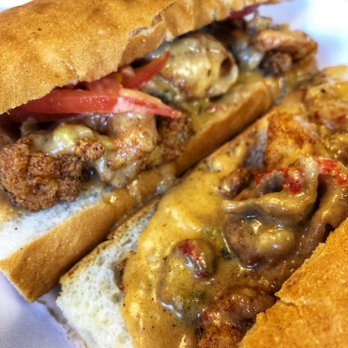 Photo: NOLA Poboys
It sits on a menu built for extremes. The Da Yat — fried shrimp smothered in gumbo — is the Who Dat’s closest relative, proving the smother concept twice over: where the bisque is rich and oceanic, the gumbo brings dark roux depth. The Surf and Turf pairs spicy fried shrimp with DaBris pot roast: the shrimp bring the crunch, the pot roast brings the gravy, and the spice ties the two together — the shrimp-and-roast-beef combo done the Bourbon Street way. Alligator filet keeps the Louisiana canon in play, the muffuletta runs on a 9-inch seeded bun with mortadella, ham, salami, provolone, mozzarella, and olive salad, and the Da-Bris Fries pile pot roast and gravy over a tray of fries.
Standard shops ask how much gravy a sandwich can hold. NOLA Poboys asked how much bisque one could take — and answered with a sandwich that eats like a stew, stays open until 4 a.m. on weekends, and feeds the Bourbon Street crowd exactly what it wants: something hot, something loud, and something that requires both hands and a plan.
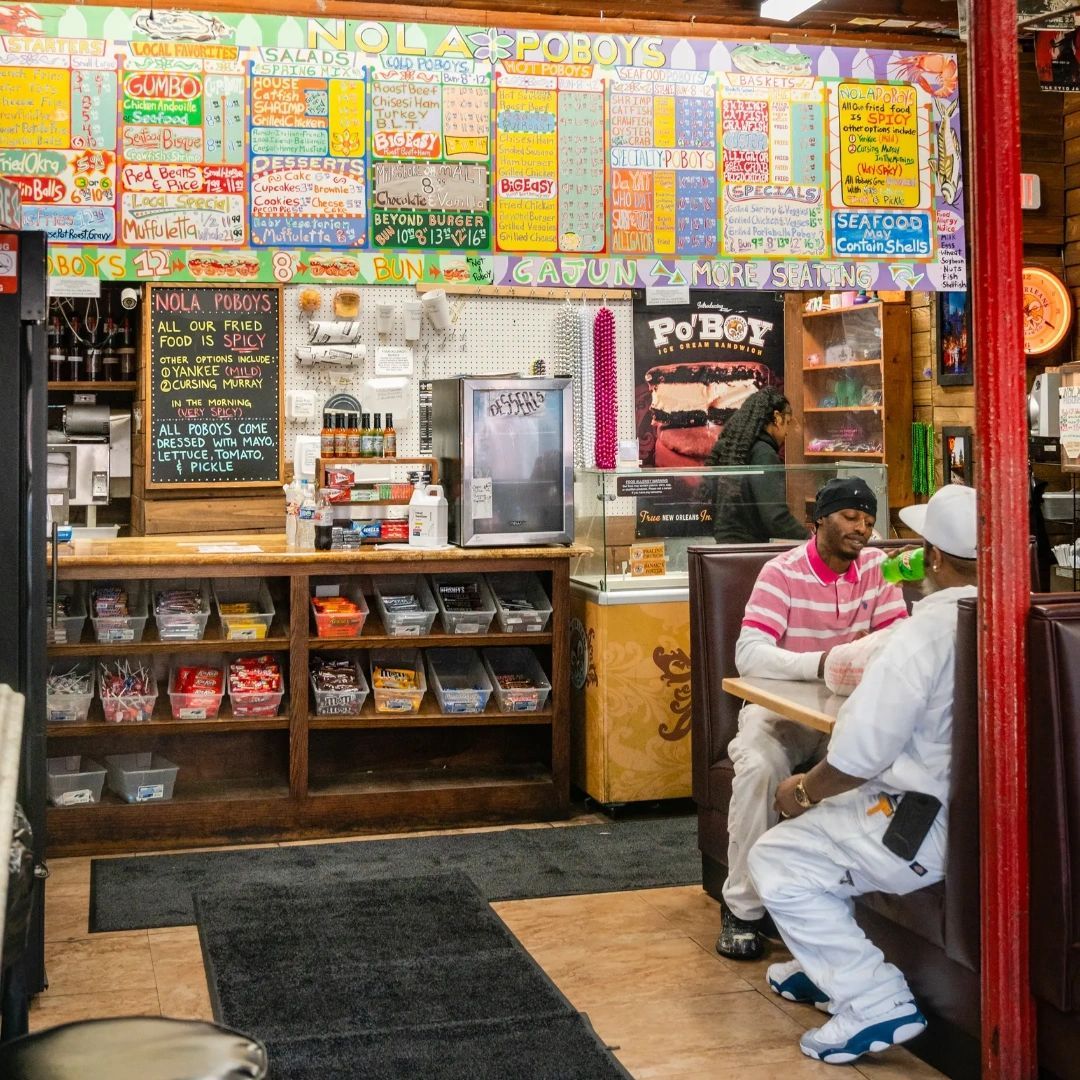 Photo: @nolapoboysbourbonst
Killer Poboys: Fine-Dining Technique in a Bar Back Room
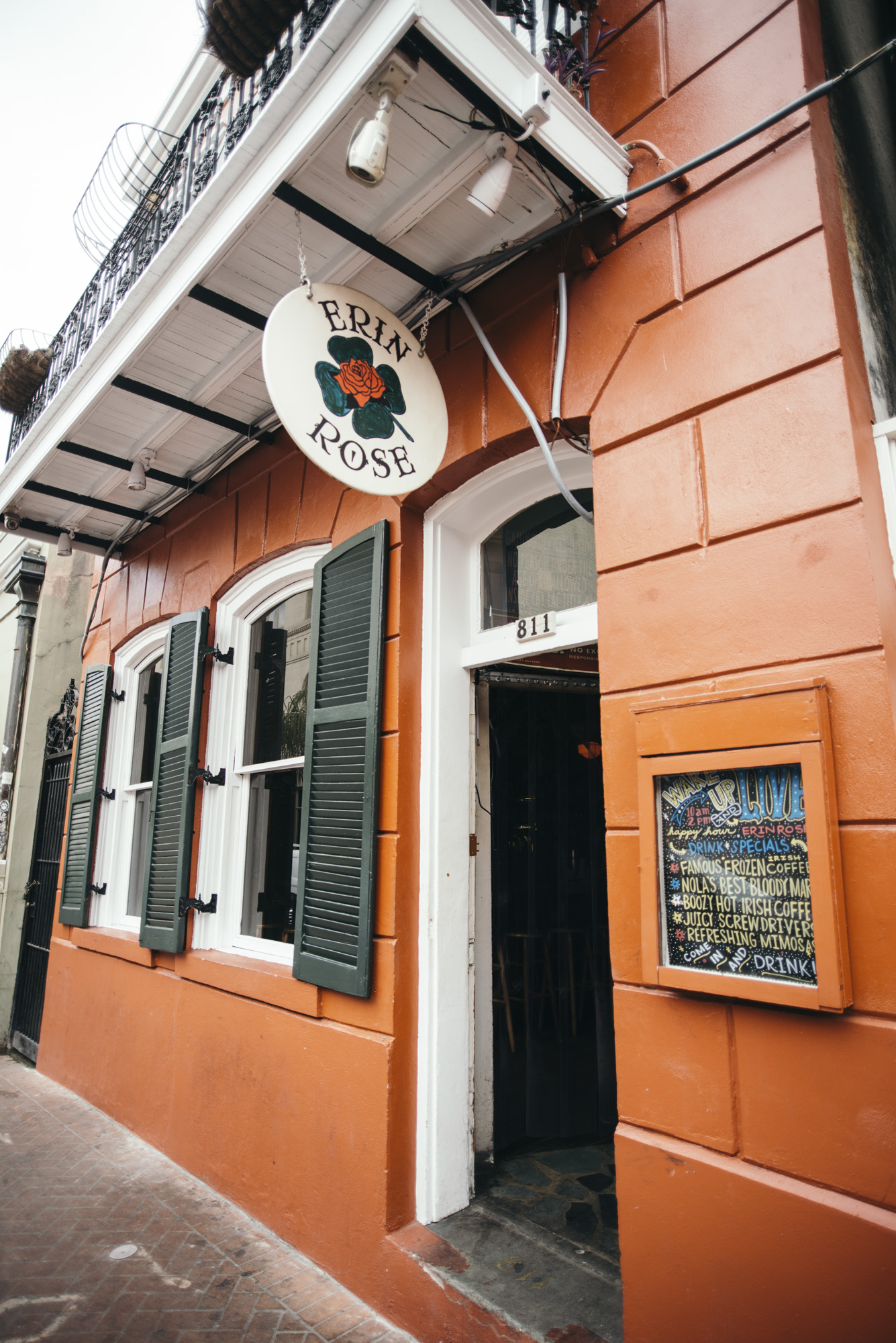 Photo: whereyat.com
The original Killer Poboys sits in the back of the Erin Rose bar at 811 Conti Street, and you have to be 21 to walk in — the shop’s own site says so right under the bar’s hours. That is the whole proposition: internationally inspired, chef-crafted sandwiches served over a bar top. Chef Camille “Cam” Boudreaux, born and raised in New Orleans, opened it in 2012, around St. Patrick’s Day, and ran it solo for six months: in at 9:00 a.m. to do all the prep, out for ninety minutes, then back to cook all night. By 2014 he was pushing 40,000 sandwiches a year out of that little kitchen. His wife and business partner, April Bellow, grew up across the river in Gretna; the two met working the kitchen at Arnaud’s on Bienville Street in the late 1990s, where she rose to become the restaurant’s first female sous chef. Boudreaux walked away from a sous-chef job at the Green Goddess on Exchange Place to start all this, and the two of them still collaborate on nearly every build.
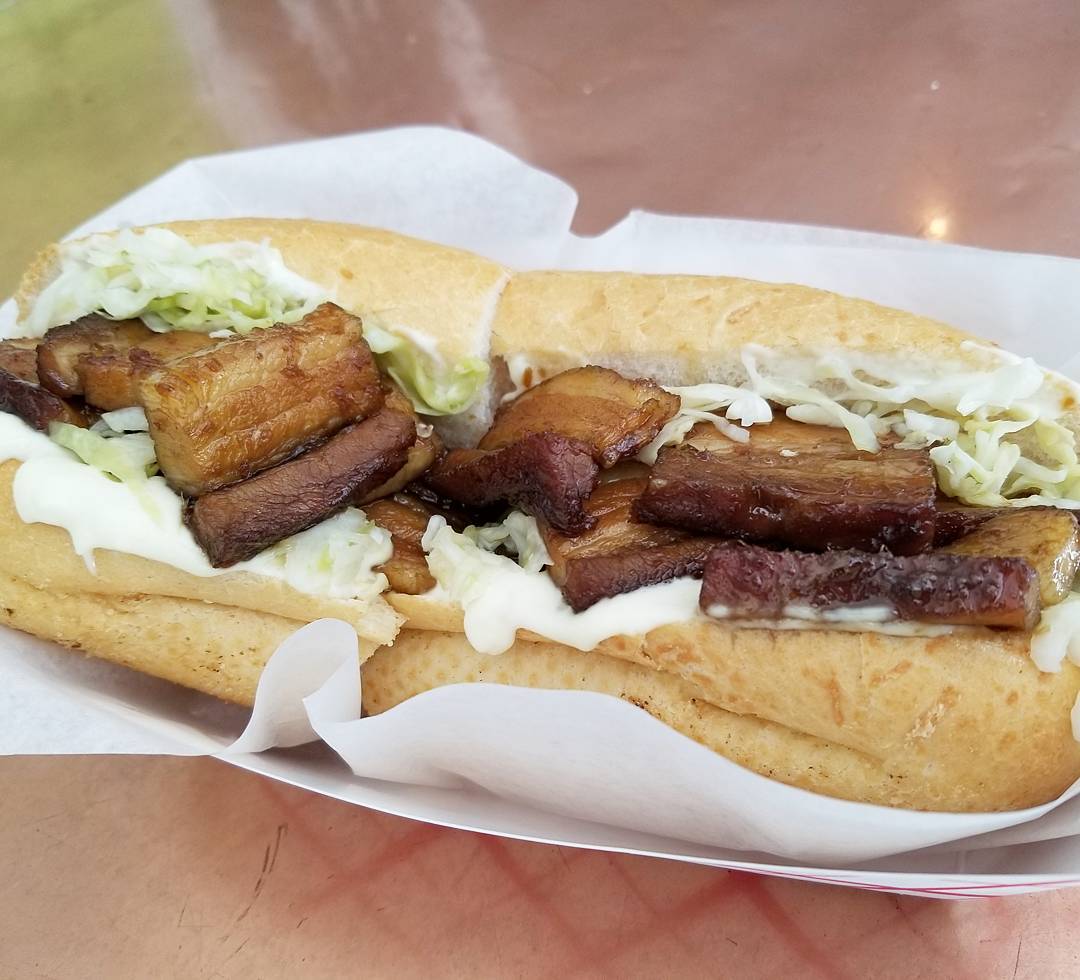 Photo: @killerpoboys
What they refused to do tells you what the shop is. In a 2015 oral history for the Southern Foodways Alliance, Boudreaux said flatly that he and Bellow “wouldn’t be happy buying iceberg lettuce, doing the ‘dressed’ format.” Standard po’boy shops fry and dress; Killer lacquers, sears, and composes. The menu reads like a tasting-menu translation exercise. The “Dark & Stormy” pork belly — the house’s signature — takes roasted pork belly and coats it in a rum-and-ginger glaze, then pairs it with a lime cabbage slaw and garlic aioli. It is the cocktail translated to a sandwich: the rum’s caramel notes and the ginger’s bite do the work of a marinade and a sauce at once. The Seared Gulf Shrimp is exactly what the name promises: seared, not fried, stacked with pickled carrots, daikon radish, and cucumber, sriracha aioli, and fresh herbs. The sear keeps the shrimp snappy where frying would bury them, and the pickles keep the whole thing bright. The Roasted Sweet Potato lands spiced sweet potato over wilted greens with a black-eyed pea and pecan spread. The Jameson Grilled Cheese and a grass-fed beef meatloaf keep the bench deep. Nothing here is dressed in the traditional sense; everything is finished like a plate.
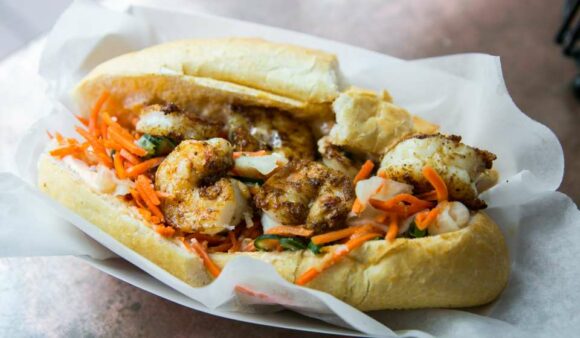 Photo: Les Hardis
The second room, Big Killer, at 219 Dauphine Street, extends the format with a longer menu. The Black Beer Beef Debris braises Louisiana wagyu in black beer and dresses it with pickled green beans, banana peppers, and horseradish sauce — a roast beef po’boy reimagined through a chef’s braising eye. Confit chicken thighs anchor a jerk chicken with roasted plantains and Jamaican cabbage; roasted cauliflower gets romesco, pickled radish, avocado, and dried kale. Press coverage has also documented a duck-fat chicken-thigh po’boy slicked with coffee barbecue sauce, which shows you how the shop thinks: rich technique, global pantry, po’boy architecture.
The news peg is the kind of recognition this format rarely earns. Killer Poboys carries the Michelin Selected restaurant designation in the 2025 Michelin Guide American South, the inaugural guide that put New Orleans on Michelin’s map, where it is listed among the city’s recommended restaurants. Few po’boy shops in the city build with this much composed intent, and the guide noticed. In a field of shops built on the fryer and the dress, Killer is built on the glaze, the sear, and the slow braise.
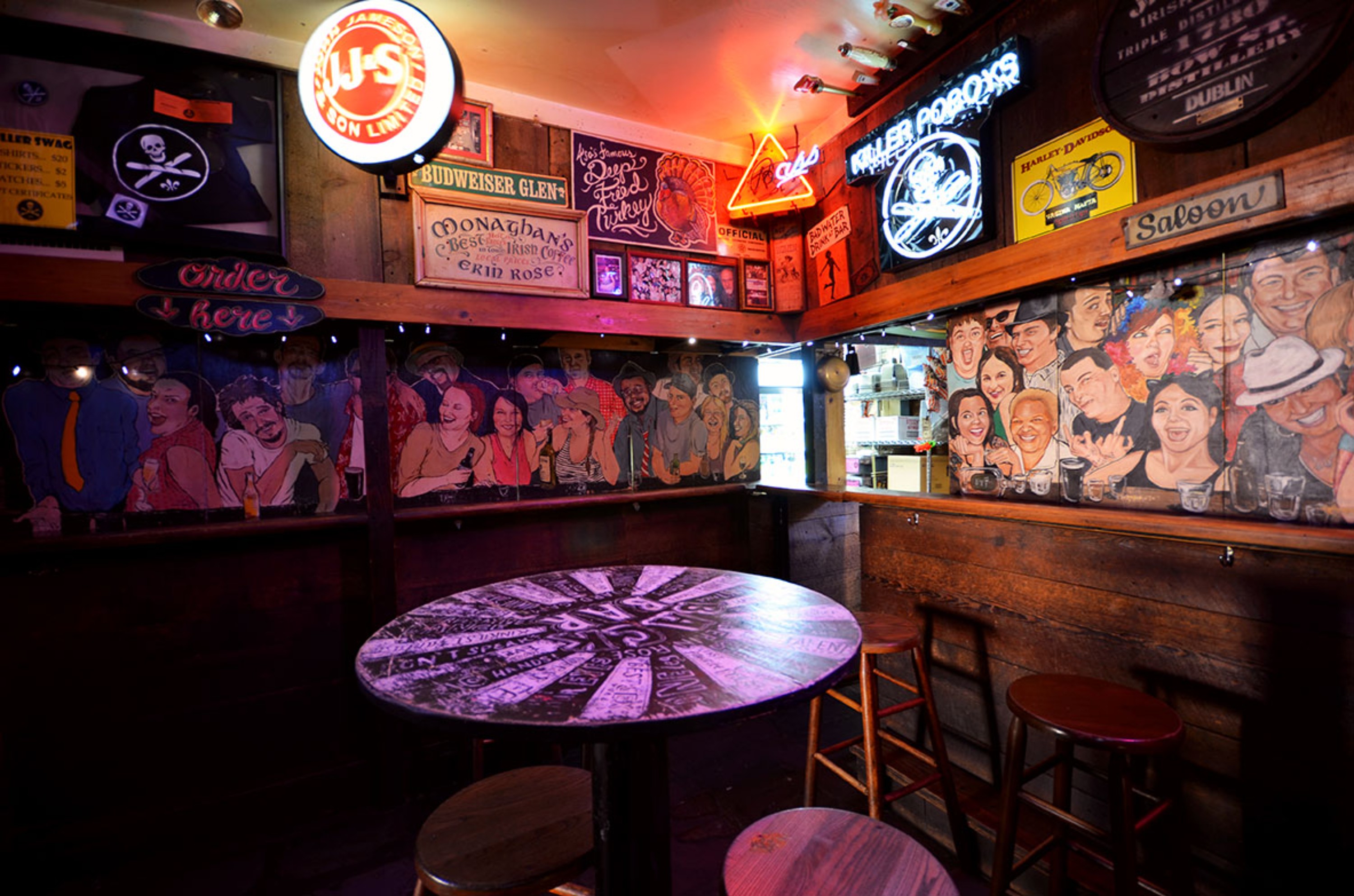 Photo: The Vendry / Erin Rose
The Bread: Where the Perfect Sandwich Starts
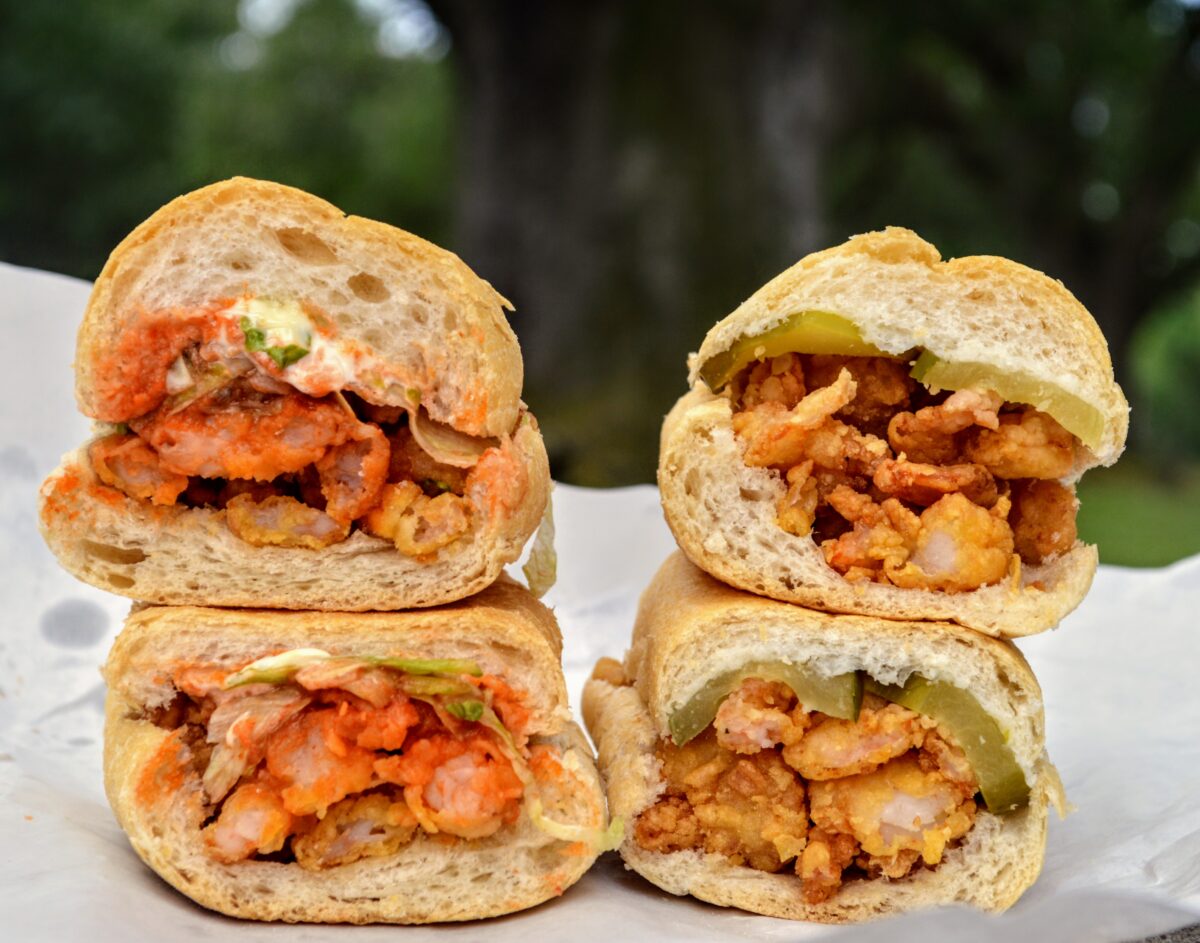 Photo: Courtesy of Leidenheimer Baking Co.
None of this works without the loaf. The po’boy’s secret — the thing that separates it from every other sandwich on earth — is New Orleans French bread, and it is a deliberate piece of engineering.
Leidenheimer Baking Company has been baking it since 1896, when German immigrant George Leidenheimer founded the bakery on Dryades Street. Today, run by the third generation of the Whann family at 1501 Simon Bolivar Ave, it is by far the city’s largest producer of po’boy bread, having absorbed its historic rivals Reising’s and Gendusa along the way. Every morning, white Leidenheimer trucks fan out across the city with the day’s bake — because the bread stales fast in the humidity, the daily delivery cycle isn’t tradition — it’s physics.
What makes the loaf different from a baguette is everything. The crust is incredibly thin — it shatters into flakes when you bite, instead of tearing the roof of your mouth like a chewy Parisian baguette. The crumb is shockingly light and airy, almost cottony; it compresses and merges with the filling instead of fighting it. The loaves are hand-stretched to a uniform 32 inches, the same width end to end, so every cut yields the same sandwich — a shape designed on purpose, not by accident. And the bake changes with the weather: as fifth-generation baker William Whann has said, the bakery puts a harder bake on the bread in hotter months because the New Orleans humidity will soften the signature crust.
As Sandy Whann, the bakery’s co-owner, once put it: with po’boys you’re adding gravy and seafood, so “you need a lighter loaf, almost more of an envelope. You never want to fight with it.”
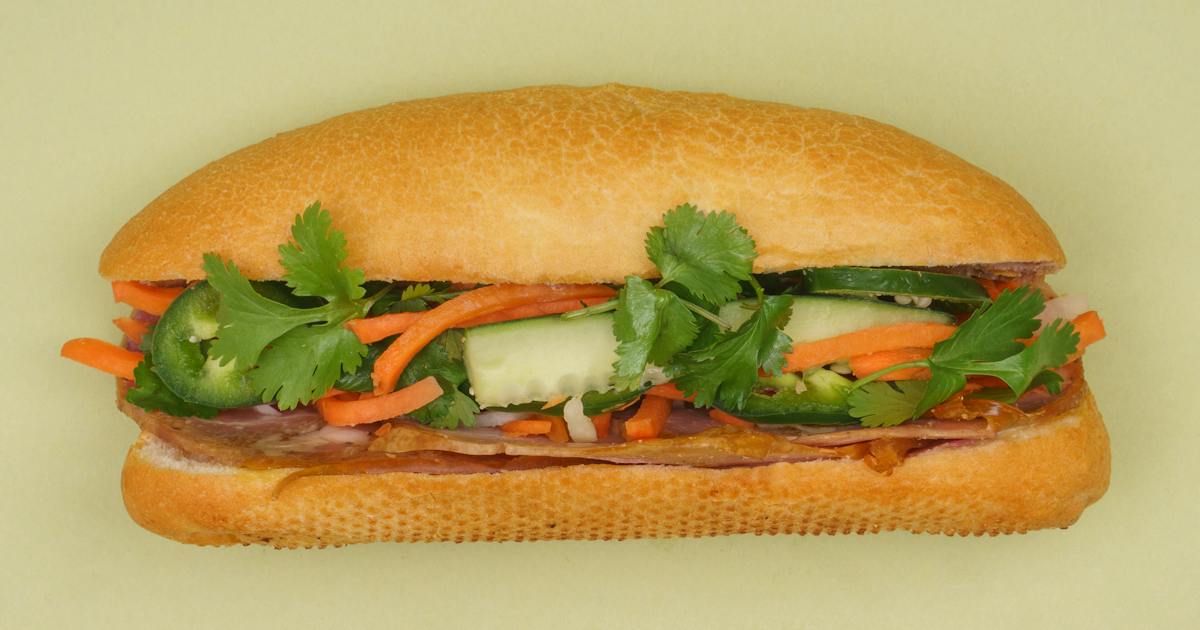 Photo: Maria Guadalupe Limos for Goldbelly / Dong Phuong Bakery
The city’s other great loaf comes from Dong Phuong Oriental Bakery in New Orleans East, opened in the early 1980s by Vietnamese refugees De and Huong Tran. Huong had learned baking in her father’s bakery in Vietnam; the family recreated the foods of home for the post-war Vietnamese community, and the bakery grew into a neighborhood institution — a 2018 James Beard America’s Classics award confirmed what the city already knew. Dong Phuong’s banh mi baguettes — shorter, thinner-crusted, airier than a French baguette, often with rice flour in the blend — supply restaurants across the city, and its miniature loaves are the official po’boy bread of Jazz Fest. Eater New Orleans has called its take on French bread the undisputed reigning champ of po’boy loaves.
Two bakeries, two immigrant stories, one city — and between them, the foundation of every sandwich in this article.
Why the Chefs Are Right
The po’boy endures because it asks the only question that matters about a sandwich: what can the bread hold? Roast beef debris, fried oysters, Bang Bang Shrimp, rum-glazed pork belly, Korean fried chicken, sweet potato and black-eyed peas — the loaf doesn’t care. It shatters, it yields, it holds.
That’s why the chefs call it the best sandwich in the world. Not because of any single filling, but because of the form: a perfect, engineered canvas that makes every filling better. The shops in this story aren’t breaking the po’boy’s rules. They’re proving how few rules it ever had.
If you go
- Pop’s Poboys — 740 Jefferson St, Lafayette. The Surf & Turf is the order; the rest of the menu is the story. Closed Sundays.
- Banh Mi Boys — 3244 Magazine St, New Orleans (Uptown; closed Mondays). Order the Bang Bang Shrimp first, then the Steak and Egg.
- NOLA Poboys — 908 Bourbon St, New Orleans. Family-owned since 1987, open late (until 4 a.m. Fri–Sat). The Who Dat — fried shrimp smothered in crawfish and shrimp bisque — is the order.
- Killer Poboys — 811 Conti St (inside the Erin Rose bar, 21+ to enter) and 219 Dauphine St, New Orleans. The Dark & Stormy pork belly is the signature; the Seared Gulf Shrimp is the sleeper.
Like this story?
Get The Pass in your inbox every Friday — free.
Questions, answered
What makes a po'boy different from other sandwiches?
The bread. New Orleans French bread — from bakeries like Leidenheimer and Dong Phuong — has a thin, shattering crust and an airy crumb that compresses around fillings instead of fighting them. That loaf is what lets a po'boy carry fried seafood, slow-braised meats, and bold sauces without falling apart or tearing up your mouth.
Where are the most creative po'boys in Louisiana?
Our editors point to four shops: Pop's Poboys (Lafayette) for everyday icons like the Surf & Turf that go way beyond fried seafood on bread, Banh Mi Boys (New Orleans) for the Vietnamese-po'boy crossover, NOLA Poboys (French Quarter) for the smothered school — fried shrimp under crawfish and shrimp bisque — and Killer Poboys (French Quarter) for chef-driven builds like rum-glazed pork belly, now Michelin Selected.
What is the Who Dat po'boy?
The signature smothered po'boy at NOLA Poboys, 908 Bourbon St in the French Quarter: fried shrimp smothered in the shop's crawfish and shrimp bisque. The bisque is also sold on its own. The shop, family-owned and open since 1987, is known for its smothered po'boys and keeps late hours — until 4 a.m. on Fridays and Saturdays.
Is Pop's Poboys in New Orleans?
No — Pop's Poboys is at 740 Jefferson St in downtown Lafayette, about two hours west of New Orleans. It is worth the drive.
What bread do the best po'boy shops use?
Most use Leidenheimer French bread, baked in New Orleans since 1896. Vietnamese-crossover shops often use Dong Phuong's banh mi baguettes — the New Orleans East bakery named a 2018 James Beard America's Classic.
Sources
- Banh Mi Boys — official site
- Killer Poboys — official site
- Pop's Poboys — official site
- NOLA Poboys — official site
- Southern Foodways Alliance — Leidenheimer oral history
- Country Roads Magazine — Pop's Poboys profile
- Southern Foodways Alliance — Camille Boudreaux oral history
- Country Roads Magazine — The Banh Mi and the Poboy
- Only In Your State — Killer Poboys profile
- List23 — Banh Mi Boys Portland announcement