Deep Dive · Chicago
Sepia's Steak Tartare Is the Best Our Editors Have Ever Had — Chicago
Sepia in Chicago's West Loop serves the best steak tartare our editors have ever had — hand-cut beef, a beef-fat toast slab, nasturtium, and pickled onion. Here's the dish.
Get more of The Pass in Google
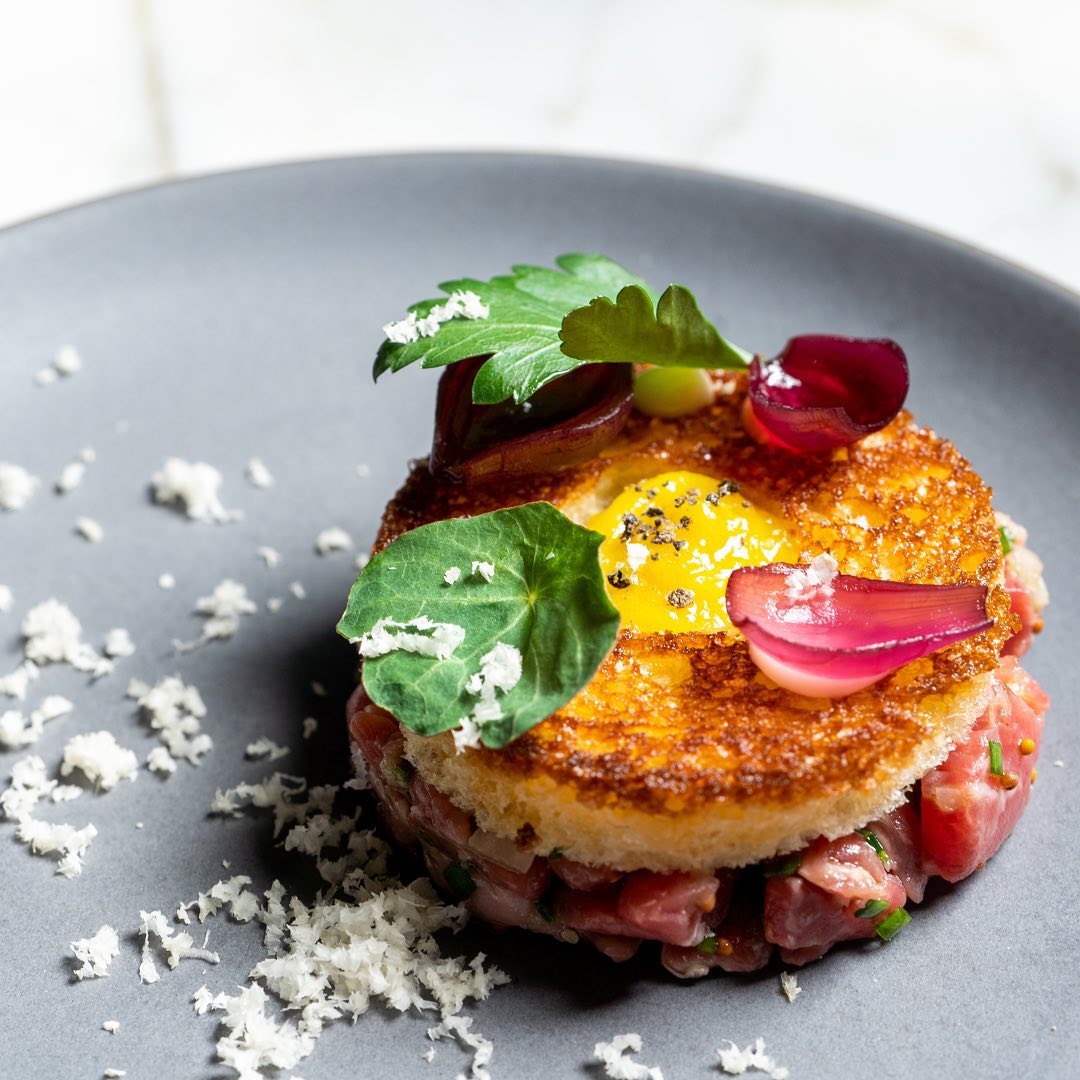
The best steak tartare our editors have ever had is served in Chicago’s West Loop. That’s the verdict, and it isn’t close. At Sepia — the Michelin-starred dining room at 123 N Jefferson St that Chicago Magazine says “just keeps humming” — the dish arrives as a small, perfect construction: ruby-red hand-cut beef under a slab of crisp beef-fat toast, scattered with nasturtium leaves, pickled red onion petals, aioli, and a snowfall of grated cheese. One bite and every other tartare you’ve had gets re-graded on a curve.
The room
Sepia has been doing this longer than most of its West Loop neighbors have existed. The restaurant sits in a 19th-century historic printshop — original wooden walls, exposed brick, vintage décor that reads cozy rather than precious — and under Executive Chef Kyle Cottle the kitchen cooks ingredient-driven contemporary American food with French technique underneath it. Chicago Magazine put it plainly in 2024: “Open for 17 years, Sepia just keeps humming.” The Infatuation gives it an 8.5. The Michelin star has never really been in doubt.
That longevity matters for a dish like this. Tartare is a young cook’s dare and an old kitchen’s proof — anyone can chop beef, but it takes a confident room to serve it with this little hiding behind it.
The dish
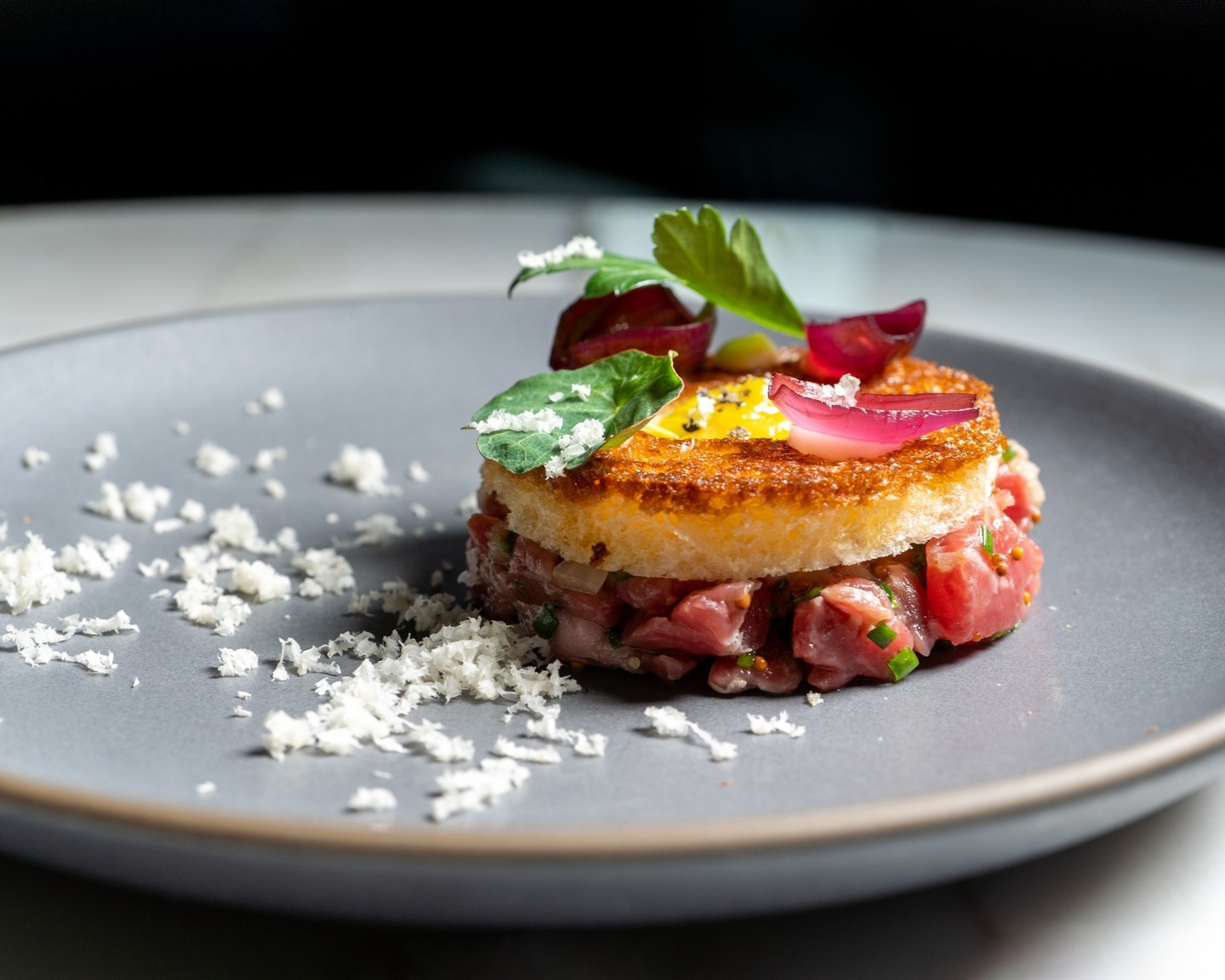
Start with the beef, because the beef is the point. It’s hand-cut, not ground — distinct ruby cubes with bite and chew, seasoned like someone in the kitchen actually tasted it. Capers and mustard are in there somewhere, but they season rather than announce. This is beef that tastes like beef, which sounds obvious until you eat your way through a city of tartares that taste like refrigerator and regret.
Then the move that makes it: the beef-fat toast slab. A round of bread fried crisp in rendered beef fat, laid over the tartare like a lid. It shatters when your fork hits it. The fat does what fat does — carries flavor, adds richness, turns a cold dish into something with warmth at its edges — and the crunch gives the soft beef something to argue with. Every element on the plate is doing work: the nasturtium leaves bring pepper, the pickled red onion brings acid, the aioli brings silk, the grated cheese brings salt.
It tasted like your first ever bite of a McDonald’s cheeseburger, like smoking weed for the first time — it’s something you chase your whole life.
That’s the one-line version. The longer version is that great tartare is about contrast — cold beef against crisp toast, richness against acid, soft against shatter — and Sepia’s plate has all of it, with nothing extra.
Why it matters
Steak tartare is having a moment it doesn’t entirely deserve. It’s on every bistro menu in America right now, and most of those tartares are fine. Fine is the enemy here. Fine is a puck of anonymous beef with a yolk on top and a $24 price tag, and it has trained a generation of diners to think tartare is a commodity.
Sepia’s is the rebuttal. It reminds you the dish has a ceiling, and that the ceiling is high — that the difference between fine and unforgettable is a kitchen that cuts its beef by hand, fries its bread in beef fat, and plates like it means it. In a city with a deep bench of great restaurants, this is the single dish we’d cross town for.
If you go
Sepia serves dinner Monday through Thursday, 5 to 9 PM, and Friday and Saturday, 5 to 10 PM, at 123 N Jefferson St in the West Loop. The format is a four-course prix fixe; reservations are strongly recommended and the dining room fills nightly.
The catch: the tartare rotates with the seasons, so it may not be on the printed menu the night you go. Ask for it. The kitchen knows the dish — and now you know to ask.
Follow The Pass for the dishes worth crossing town for.
Like this story?
Get The Pass in your inbox every Friday — free.
Questions, answered
What is Sepia in Chicago known for?
The Michelin-starred West Loop dining room is known for refined contemporary American cooking in a 19th-century printshop — and, to our editors, the best steak tartare we've ever had: hand-cut beef under a crisp beef-fat toast slab.
Is the steak tartare on Sepia's menu?
It rotates with the seasons. If it isn't on the printed menu the night you go, ask for it — the kitchen knows the dish.
Where is Sepia and when is it open?
123 N Jefferson St in Chicago's West Loop. Dinner Monday through Thursday 5–9 PM, Friday and Saturday 5–10 PM. Reservations are strongly recommended.
How much is dinner at Sepia?
Sepia runs a four-course prix fixe (Chicago Magazine listed it at $95 in 2024); expect the current price to be higher. Book through their site.