Deep Dive · New York, NY
Two Institutions, One Street
Russ & Daughters and Katz's Delicatessen sit a two-minute walk apart on East Houston Street — smoked fish, bagels, and lox on one corner, hand-carved pastrami on the other, the two halves of Jewish New York food, both running since the early 1900s. Here's what to order at each, and why this food can only come from the Lower East Side.
Get more of The Pass in Google
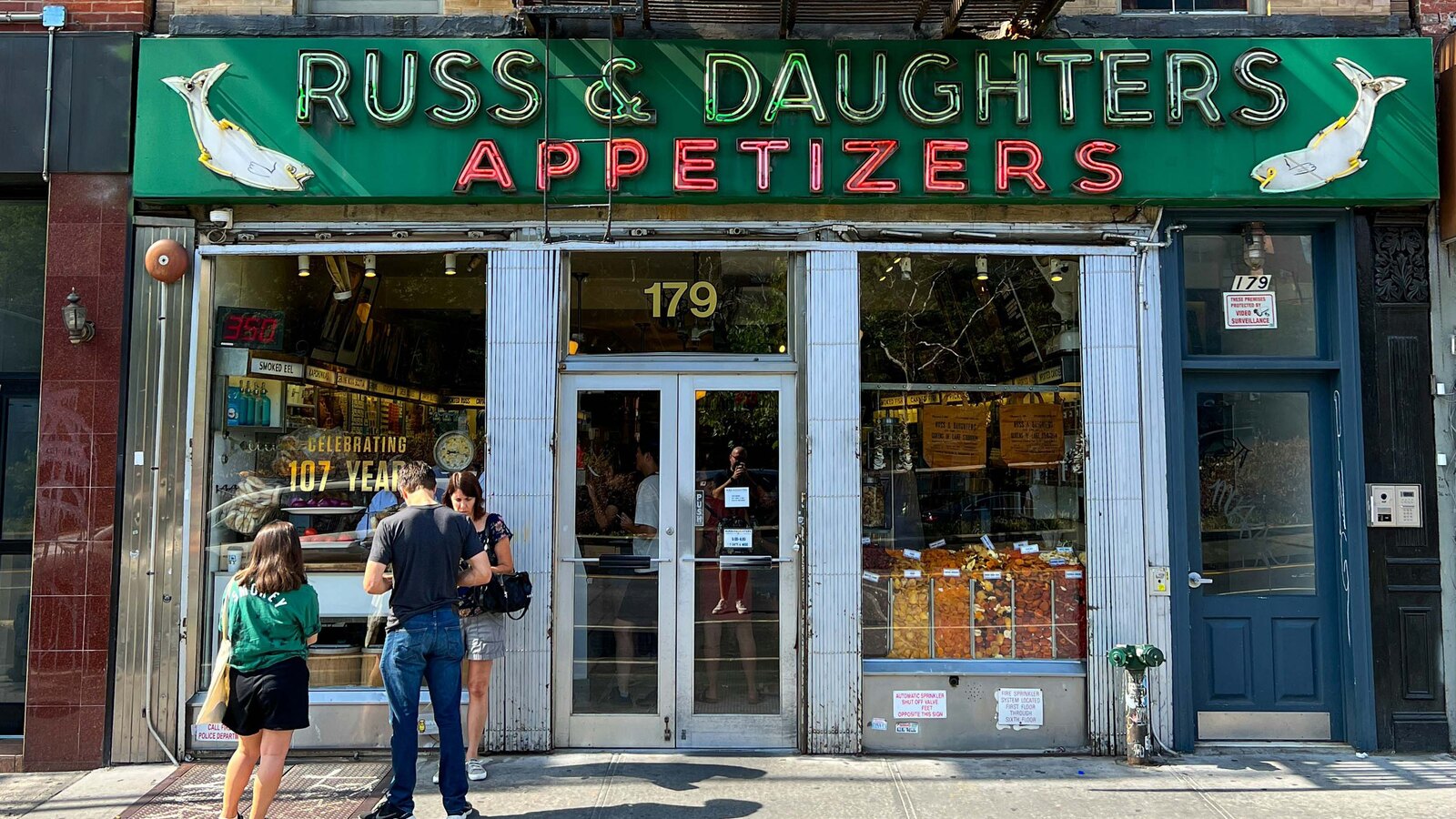
Before the doors open at 179 East Houston Street, there is usually a line. The sign above it — RUSS & DAUGHTERS APPETIZERS, green paint on the same storefront the shop has occupied since 1920 — promises the narrow, bright room behind it, where the lox comes off the fish in translucent sheets and the countermen hand you a taste before you’ve decided anything. Two minutes east, on the same block, the other half of the job is underway at 205 East Houston: Katz’s Delicatessen, a cavernous deli where pastrami is carved by hand off a whole pepper-crusted brisket and the numbered ticket in your pocket is worth fifty dollars.
They are not the same kind of place, and that is the entire point. Russ & Daughters does fish, dairy, bagels, cream cheese. Katz’s does meat, smoke, pepper, rye. A century ago, kosher law split Jewish food in two — meat and dairy could not share a kitchen, a plate, or a store — and the Lower East Side built an institution on each side of the line. These are the two that survived. Eat at both and you don’t just taste two great shops. You taste the whole system, the way it was designed to work.
Russ & Daughters
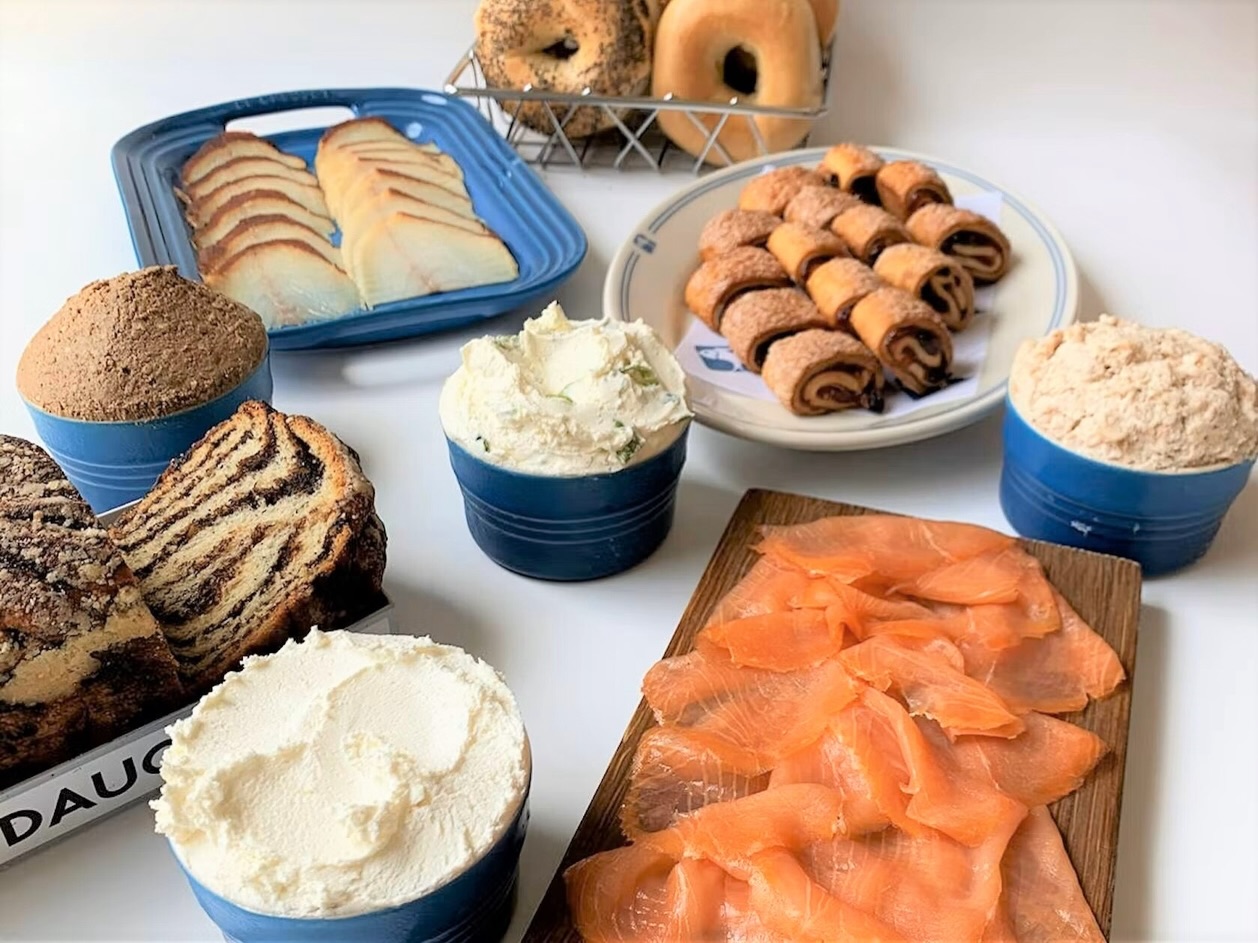
The shop is narrow, bright, and quiet — a counter, not a hall. Take a number, step up, and watch them carve: the lox comes off the fish in translucent sheets, the knife work as precise as anything at the deli down the street. They’ll hand you a taste while you wait. Say yes.
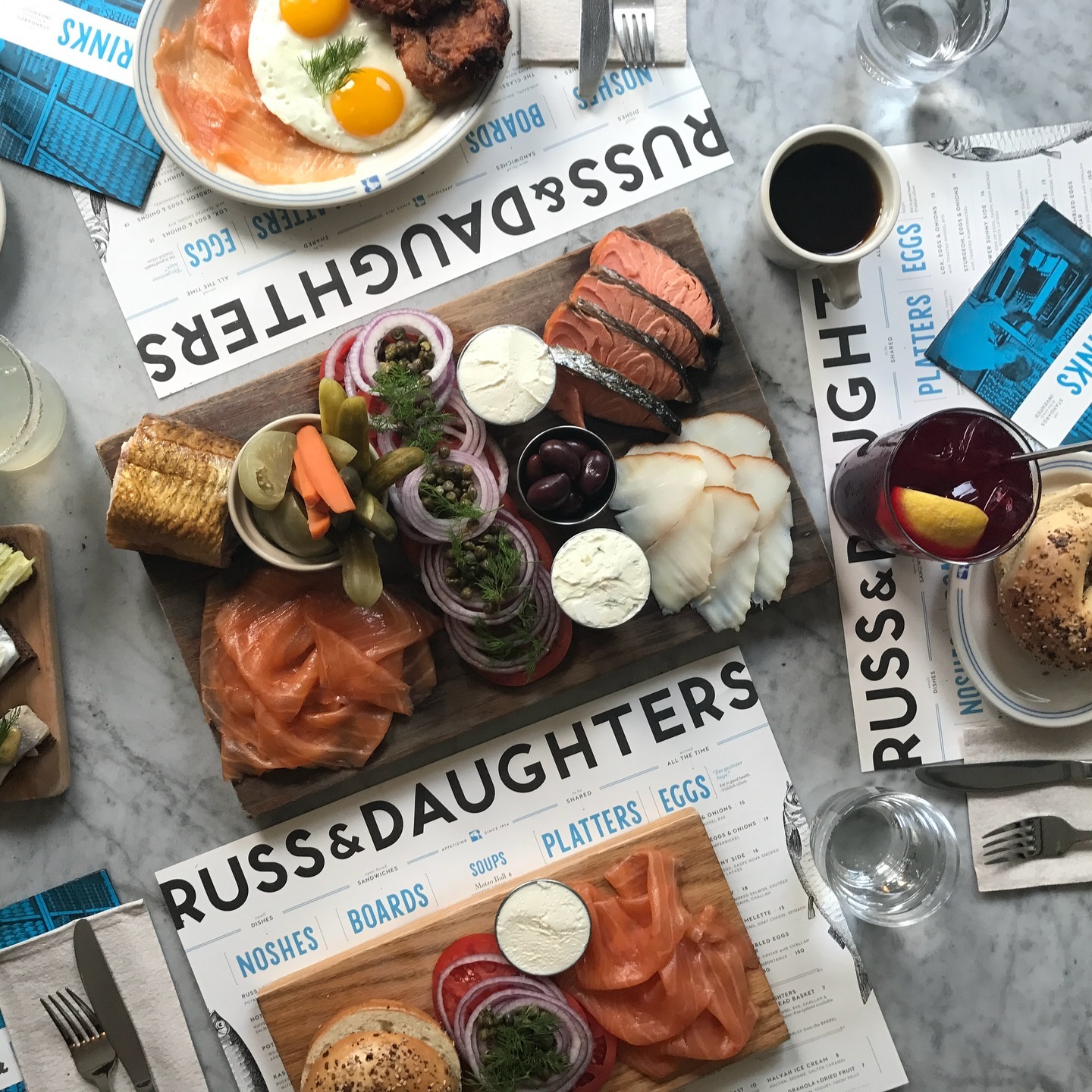
Here’s what nobody tells you the first time: there is no single lox here. The case holds seven kinds of salmon, and the counter staff will walk you through every one until you land on yours. Start with the Gaspe Nova — Niki Russ Federman calls it the quintessential New York–style smoked salmon, marbled and fatty enough to turn silky on the tongue. The Scottish is the middle ground, smoky but moist, a fat fish that keeps its silkiness. The Western Nova, cut from wild king salmon, is the athlete of the case: leaner, tighter, more assertive. Then there’s true belly lox, the old-country original — salt-cured, no smoke, intensely salty, and the reason the bagel-and-cream-cheese combination exists at all: as Niki puts it, the bread and dairy were invented to cut that salt. And the kippered salmon, hot-smoked and served in thick vertical slices, the sleeper of the case.
Order the classic — lox, cream cheese, bagel — and understand what you’re eating. The bagel-lox-cream cheese trio was invented in America, by this food culture, for Sunday mornings; this is the shop that codified it. Then go further down the case: whitefish salad, smoky and flaked, the sleeper order of the whole street; pickled herring in cream sauce; sable, sturgeon, caviar if you’re feeling ambitious.
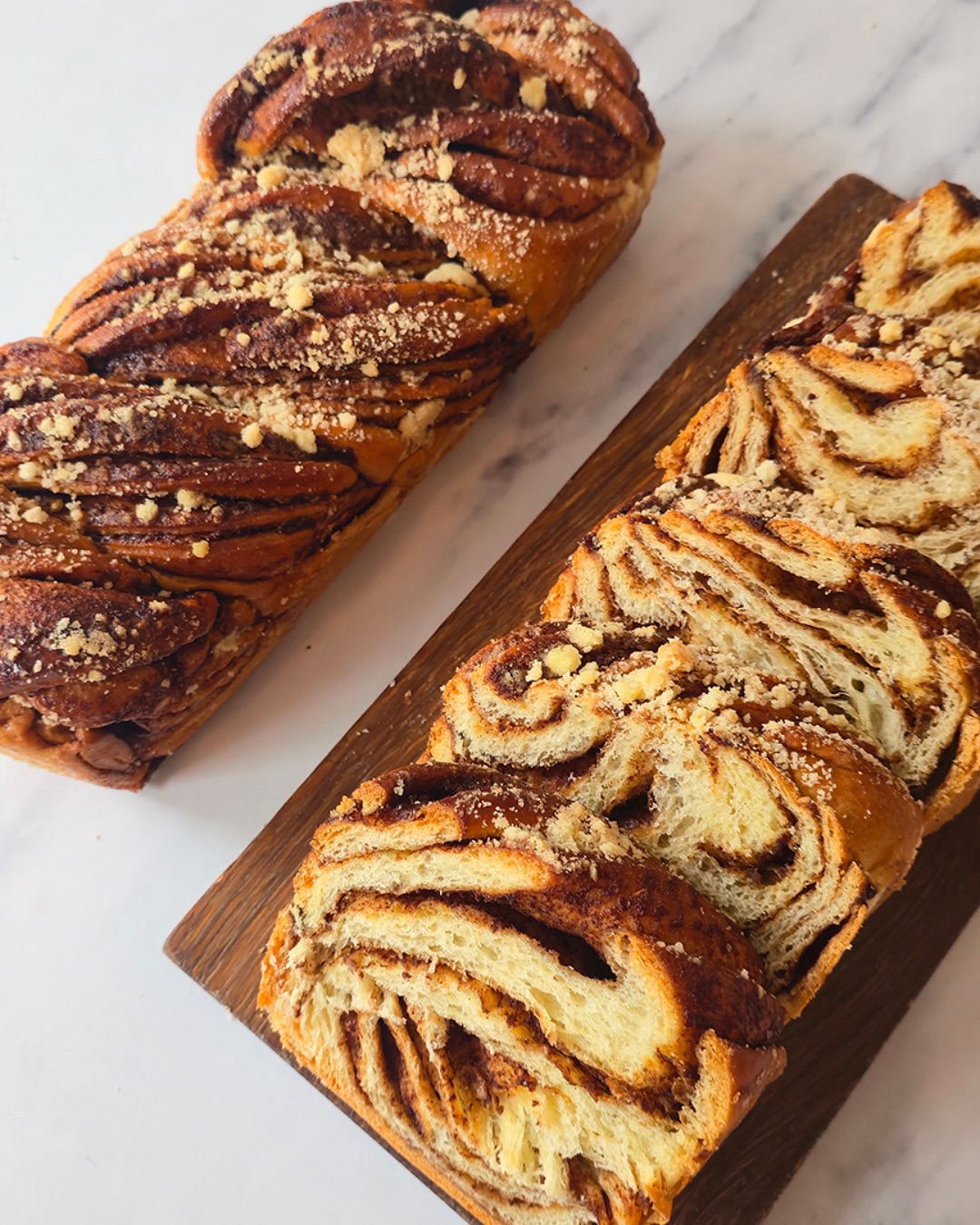
The chocolate babka — dark, marbled, dense — is the thing to take home, and the thing you’ll wish you’d bought two of.
The story is the family’s, all four generations of it. Joel Russ arrived from Poland around 1905 carrying mushrooms on his shoulders, worked up to a pushcart, then to herring, then in 1914 to a storefront around the corner — J. Russ International Appetizers. In 1920 he moved to 179 East Houston, where the shop has stood ever since. In 1933 he made his three daughters — Hattie, Anne, and Ida — partners and renamed it Russ & Daughters, reportedly the first American business to put daughters in the name. It wasn’t a statement; as Hattie told it, it was parnosa — making a living. The daughters had been fishing herring out of barrels since they were eight.
The daughters were the shop. Hattie, the eldest, was the charismatic one behind the counter, so good at cutting fish she’d hold up a slice and rhapsodize over its beauty — a line Mark Russ Federman tried on a customer decades later, only to be told: “Do me a favor. Don’t fall in love with the merchandise.” Anne, Mark’s mother, was serving customers in the shop in 1939. Around the neighborhood they were known as the Sturgeon Queens, the subject — decades later — of a documentary by that name. And the name on the sign kept working on people: Ruth Bader Ginsburg, a lifelong customer, said that growing up, seeing “Russ & Daughters” taught her, before she knew the word feminist, that women could matter in an enterprise the same as men.
Today the fourth generation — cousins Niki Russ Federman and Josh Russ Tupper — runs it, along with the sit-down Russ & Daughters Cafe on Orchard Street, the same street where their great-grandfather pushed his cart, and a bagel bakery in the Brooklyn Navy Yard. The Cafe is the same ritual with chairs: go with four or more people, order the smoked-fish platter, work the whole menu.
Katz’s Delicatessen, the deli
Two minutes east on Houston, the whole register changes. Start at the counter, because that’s where the sandwich is really made. Order the pastrami on rye and watch the cutter work: a whole brisket, pepper-crusted black, broken down by hand into thick, steaming slices — never a machine, never thin. The pile goes onto rye with mustard, the bread barely a structural suggestion under the weight of the meat. This is the sandwich the room exists for, and the room knows it: some 15,000 pounds of pastrami move through here every week.
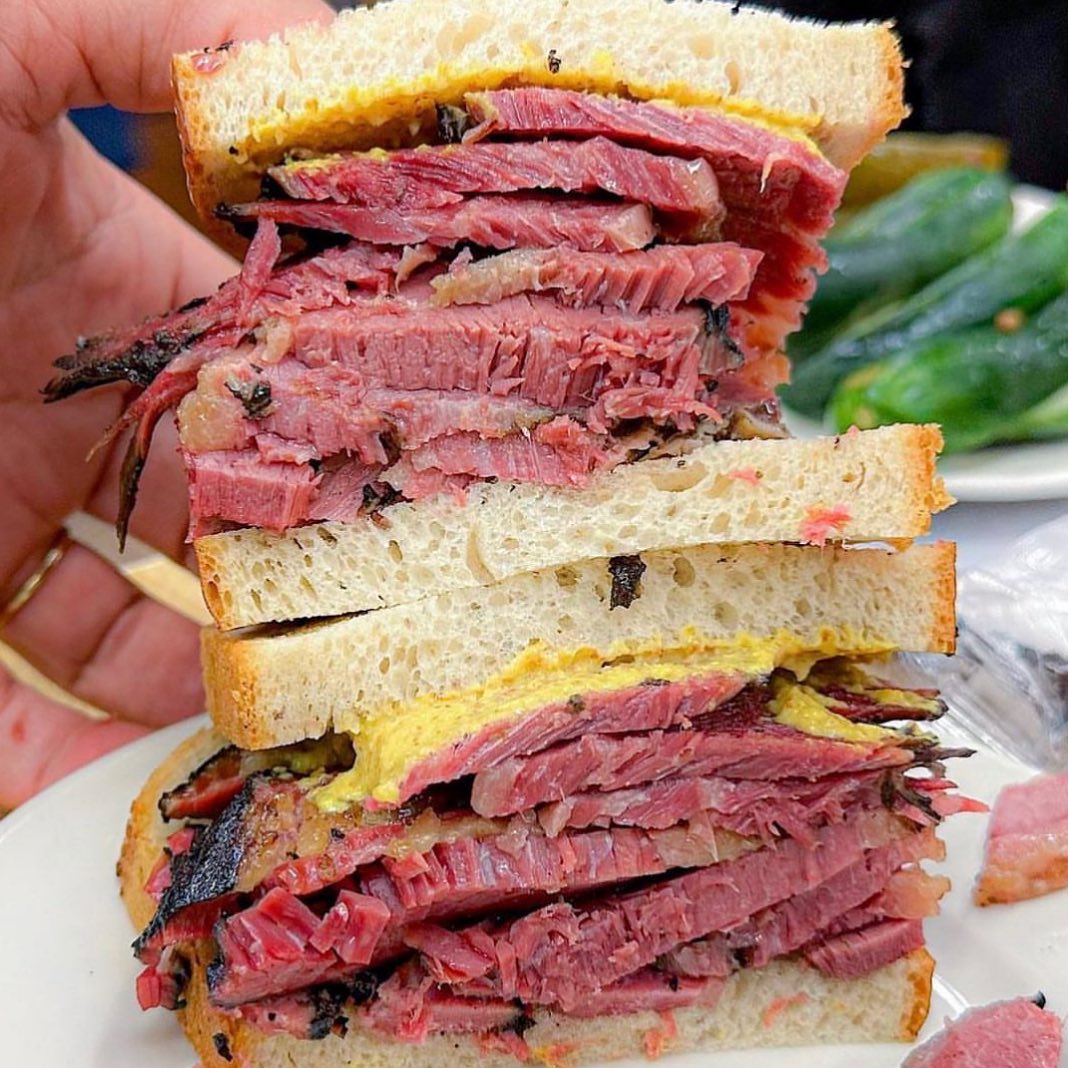
The first thing to understand is the ticket. A door attendant hands you a printed, numbered ticket when you walk in, and that ticket is your whole visit — the countermen mark your order on it in pencil, station by station, and you pay on the way out. Lose it and the house charges you fifty dollars, a policy with its own Eater explainer and its own logic: it keeps everyone honest in a room that runs on controlled chaos. Hold onto it like your wallet.
The pickles land with the sandwich and they’re not an afterthought. Half-sours — bright, crisp, still tasting of cucumber and garlic — and full-sours, the deep fermented ones, olive-green and sour all the way through. Eat them between bites; they’re the acid the richness needs.
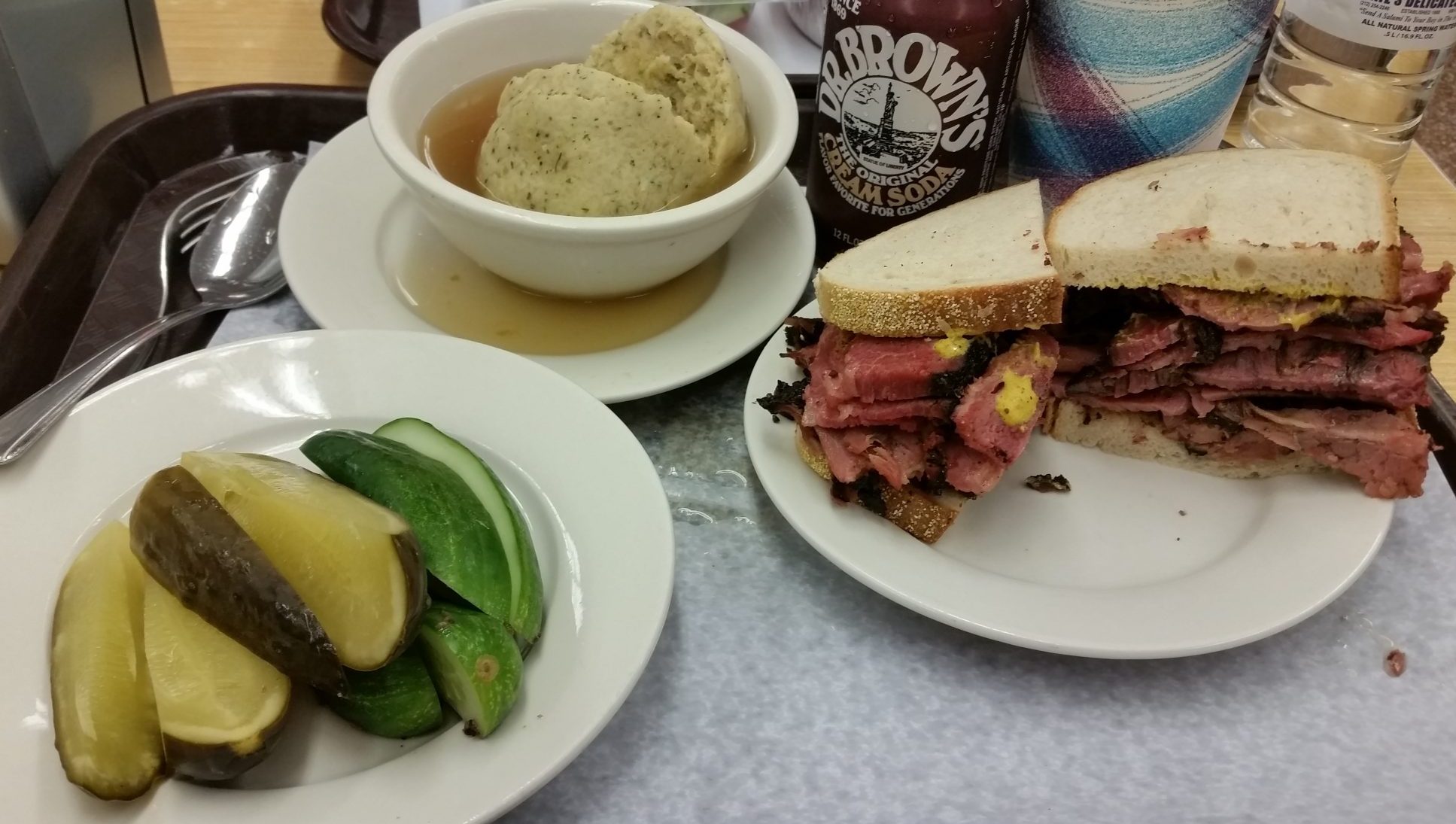
The room itself is the other half of the order. It has barely changed since the storefront went up in the late 1940s: the long wall of framed celebrity photos, the neon, the tables with their own legends. The corner table carries a sign — “Where Harry met Sally… hope you have what she had! Enjoy!” — marking the 1989 scene that made the place immortal.
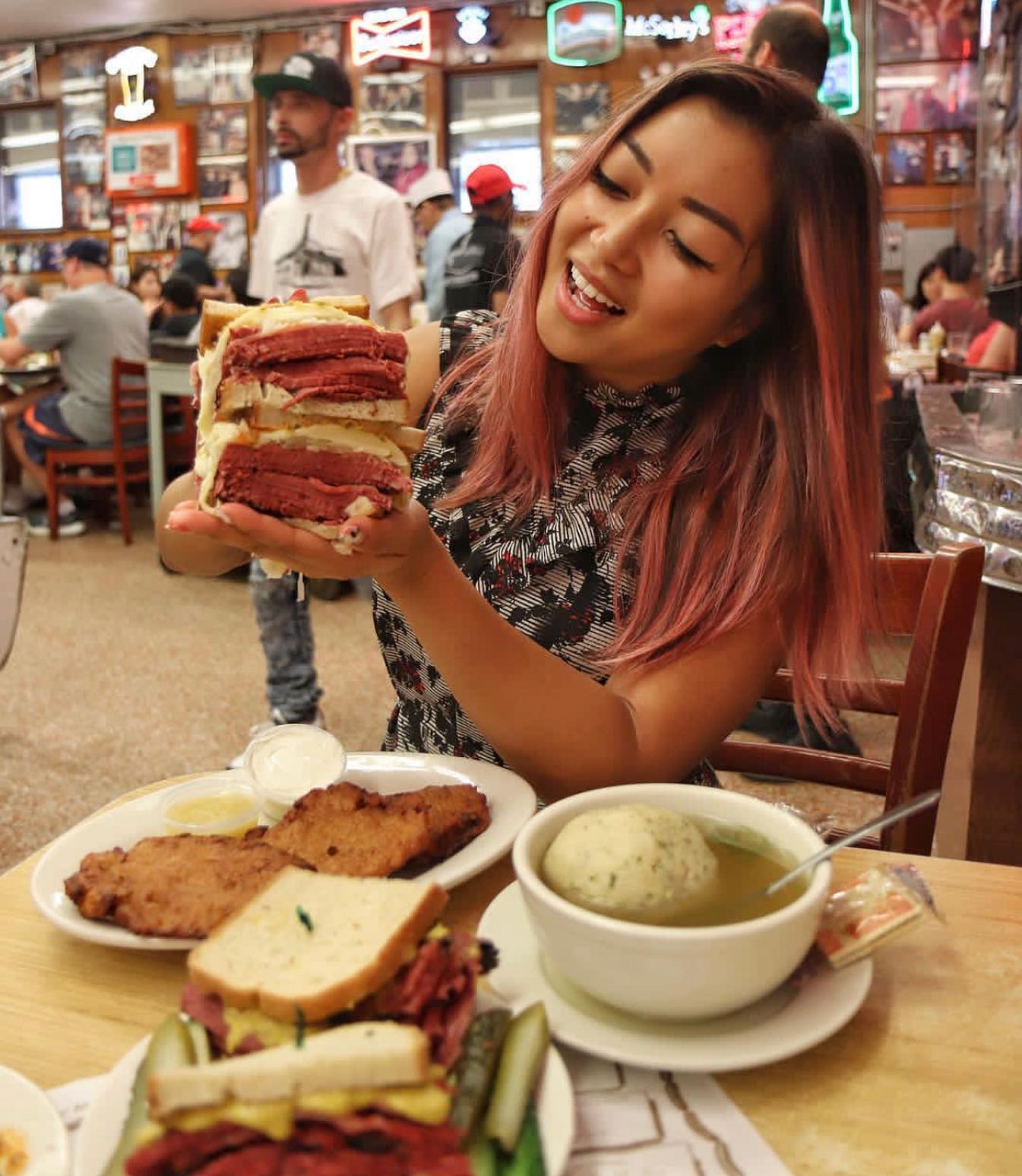
During the war, the owners’ sons served overseas and the family started shipping salami to the troops; Rose Tarowsky’s slogan, “Send A Salami To Your Boy In The Army,” is still on the wall and still on the t-shirts. The place opened in 1888 as Iceland Brothers on Ludlow Street, became Katz’s in 1910, crossed the street when the subway came through in the 1930s, and has been carving ever since. One honest note: it is not kosher — kosher-style, the tradition without the certification — and it is always crowded. Go anyway. Some rooms you judge by the line; this one you judge by the pastrami.
Why this only works here
Here’s the part that matters. These two shops are not two restaurants that happen to be near each other. They are the two surviving halves of a single system, and the system could only have been built on the Lower East Side.
The split starts with kashrut. Jewish dietary law forbids mixing meat and dairy — not just on the plate, but in the kitchen, the utensils, the store itself. So when Eastern European Jews arrived on the Lower East Side in the great wave of the late 1800s and early 1900s, they built two kinds of shop. The delicatessen took the meat: pastrami, corned beef, brisket, tongue, chopped liver. Shops like Russ & Daughters took everything else: smoked and cured fish, cream cheese, pickled vegetables, herring, butter, eggs. Fish is parve — neither meat nor dairy under the law — so it could sit comfortably next to the dairy case. The American invention was the Sunday bagel-and-lox brunch these shops came to anchor.
The economics were pure tenement life. Smoked fish needed almost no preparation and almost no refrigeration — critical for families working long hours in walk-ups. Pushcarts became storefronts; storefronts became institutions. In 1930 there were roughly 500 of these fish-and-dairy shops across New York City alone. Then the old logic dissolved: as fewer customers kept kosher and the food went mainstream, delis started serving fish, supermarkets stocked the specialties, and the children of the owners went into other trades. By 2015 fewer than ten remained in the city. The delis thinned out the same way.
That’s what makes this block unrepeatable. Russ & Daughters survived because the family kept it in the family, daughters and all, for four generations and counting. Katz’s survived because it never diluted the thing — hand-carved pastrami, the ticket, the chaos — through more than a century of ownership changes and into the Dell family’s hands since 1988. They didn’t survive as museums. They survived as working shops, on the same street, one block apart, still doing the thing the street was built for. You cannot franchise that. You can only stand in line for it.
The day, planned
Do Russ & Daughters in the morning and Katz’s for lunch — Russ & Daughters opens at 8 a.m. and the line builds, while the deli rewards a midday arrival. Russ & Daughters: 179 East Houston Street, open 8 a.m.–4 p.m. daily. Katz’s Delicatessen: 205 East Houston Street at Ludlow, open late seven days and 24 hours on weekends; take the ticket at the door and guard it with your life.
Order the lox where the fish is the point. Order the pastrami where the meat is the whole argument. Walk the block between them — it takes two minutes, and it’s the best two minutes on Houston Street.
Like this story?
Get The Pass in your inbox every Friday — free.
Questions, answered
How far apart are Katz's and Russ & Daughters?
About a two-minute walk. Russ & Daughters is at 179 East Houston Street, just west of Orchard; Katz's is at 205 East Houston on the corner of Ludlow. Same street, one short block — do both in one trip.
Why is one shop meat and the other fish?
Jewish dietary law forbids mixing meat and dairy — not just on the plate, but in the kitchen and the store itself. So the deli became the meat place (pastrami, corned beef, brisket, tongue), and Russ & Daughters took the other half: lox, whitefish, cream cheese, pickled herring. Fish is parve — neither meat nor dairy — so it sits comfortably next to dairy. They're the two halves of one food culture.
What should I order at Russ & Daughters?
The classic: lox on a bagel with cream cheese — and ask the counter to walk you through the seven salmon varieties (Gaspe Nova, Scottish, Western Nova, belly lox, kippered) before you commit. Whitefish salad and the chocolate babka are the other two non-negotiables.
What should I order at Katz's?
The pastrami on rye, full stop. Hand-carved at the counter, pepper-crusted, stacked thick between rye with mustard, pickles on the side. The countermen will hand you a taste while you wait — say yes.
Are they kosher?
Neither is kosher-certified. Katz's is kosher-style — the menu is built on Jewish deli tradition without the certification — and Russ & Daughters isn't certified either.
Do I need a reservation? What are the hours?
Neither takes reservations in the traditional sense. Russ & Daughters is a counter-service shop, open 8 a.m. to 4 p.m. daily; expect a line on weekend mornings. Katz's runs on its famous ticket system — grab a ticket at the door and do not lose it (a lost ticket costs $50). It's open late seven days and 24 hours on weekends.
Sources
- Russ & Daughters — official site
- Katz's Delicatessen — official site
- Wikipedia — Russ & Daughters
- Wikipedia — Katz's Delicatessen
- Montana Public Radio — 'A visit to Russ & Daughters, an iconic 100-year-old, family-run New York City cafe'
- Eater (What's the Difference?) — 'What's the Difference Between Lox, Nova, and Smoked Salmon?'
- St. Louis Jewish Light — 'A scripted TV series about Russ & Daughters may be coming soon'