Deep Dive · Bologna, Italy
Two Trattorias, One Ragù: Why Bologna's Best Lasagna Can Only Happen Here
Al Sangiovese and Trattoria Da Me sit a twenty-minute walk apart in Bologna, both cooking the Emilian canon at the highest level — lasagna with a burnished crust, tagliatelle under a dense slow-cooked ragù. Here's what to order at each, and why this food can only come from Emilia-Romagna's ingredients.
Get more of The Pass in Google
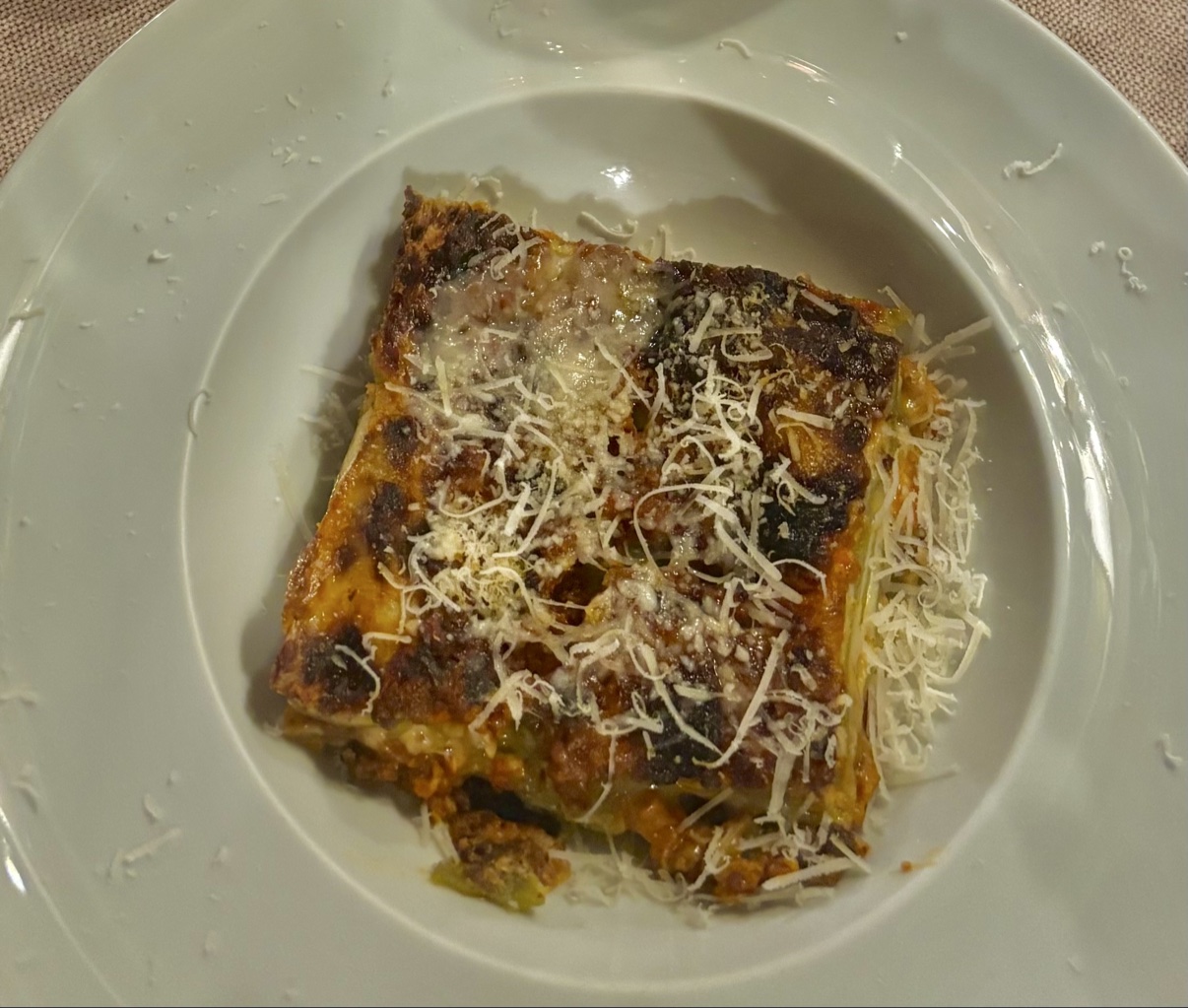
There is a stretch of Bologna, walkable in an evening, where the two most serious plates of the Emilian canon sit within twenty minutes of each other. At one end, a candlelit wood-paneled room where the lasagna arrives with a crust gone past golden into something deeper. At the other, a family trattoria running since 1937 where the tagliatelle comes buried under a ragù so dense it barely qualifies as sauce.
Neither place is trying to reinvent anything. That’s the point. What they’re cooking — lasagna alla bolognese, tagliatelle al ragù, tortellini in brodo — is the product of ingredients that only exist in this corner of Italy, made by hands trained in a tradition Bologna takes seriously enough to register with the Chamber of Commerce. Eat at both and you don’t just taste two great restaurants. You taste why this food can’t come from anywhere else.
Stop one: Al Sangiovese, for the lasagna
Start with the lasagna, because that’s what the room is really about. It arrives square-cut, the top gone past golden into a burnished, almost-blackened gratinato crust where the cheese caught the oven’s heat and turned to crunch. Under a snowfall of Parmigiano-Reggiano, the cut edge shows the strata: pasta, ragù, béchamel, repeat. One regular put it plainly: “rarely have we eaten such an excellent lasagna.” In Bologna, that sentence carries weight.
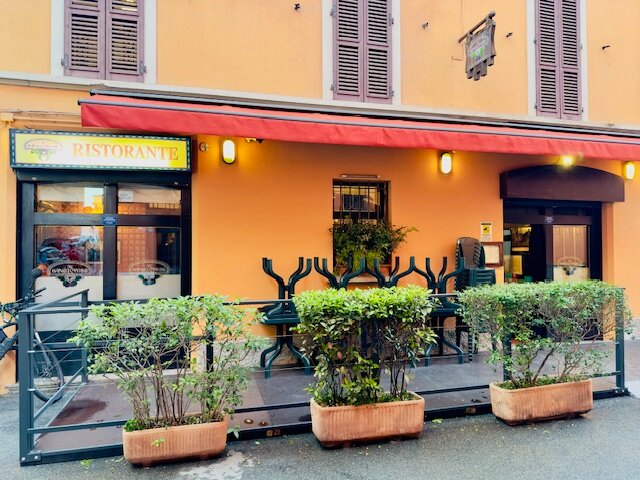
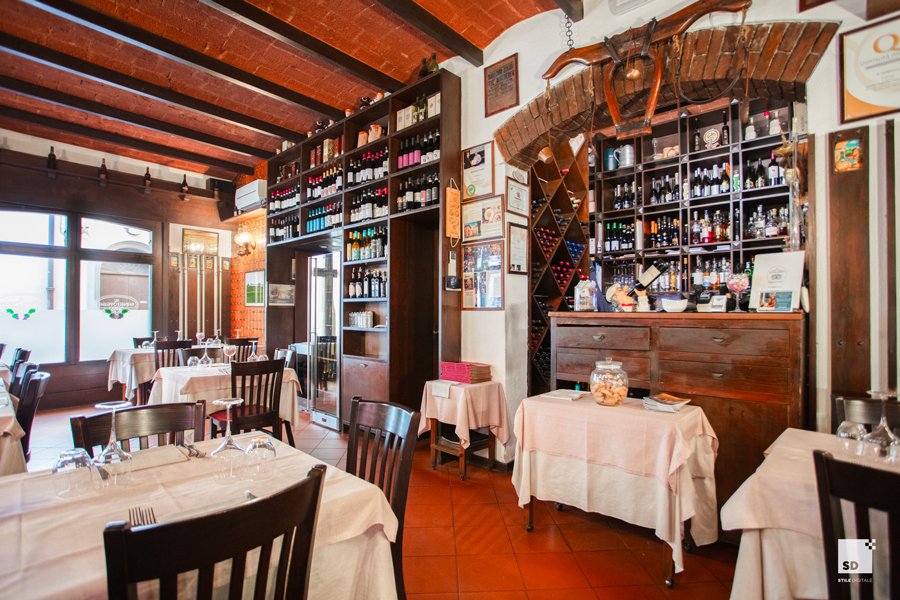
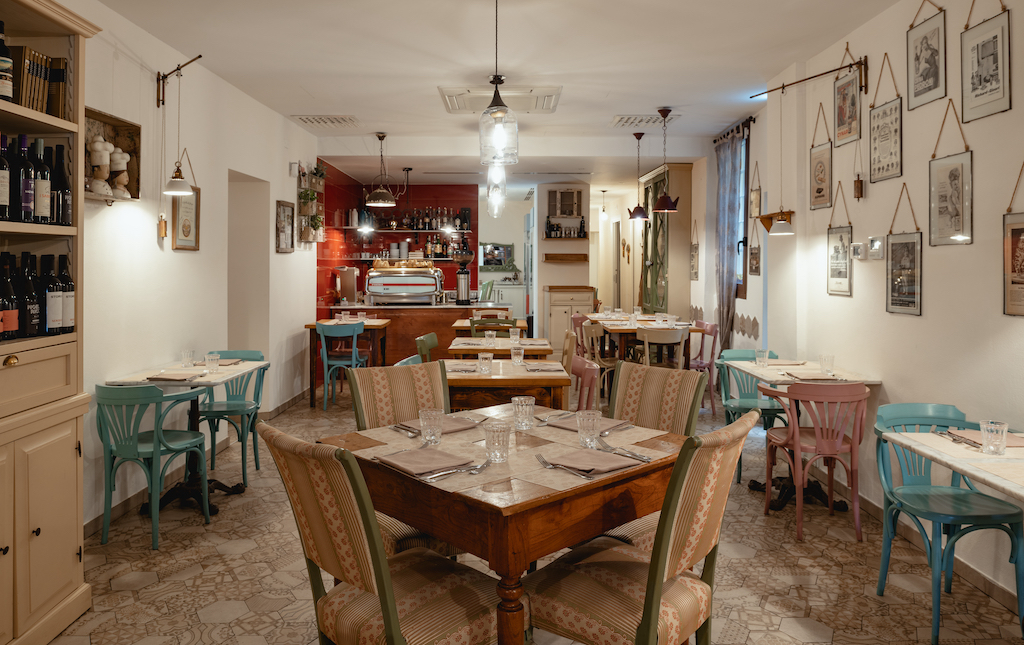
Al Sangiovese sits on Vicolo del Falcone, in the Borgo d’Azeglio a short walk from Piazza Maggiore — close enough to the center to find, tucked enough to miss the tourist crush. The family has run it since 2004, and the room shows it: small, wood-paneled, candlelit, the kind of place where the owners work the floor and nobody is turning your table. No double seatings, no rush — dinner at the pace dinner is supposed to go.
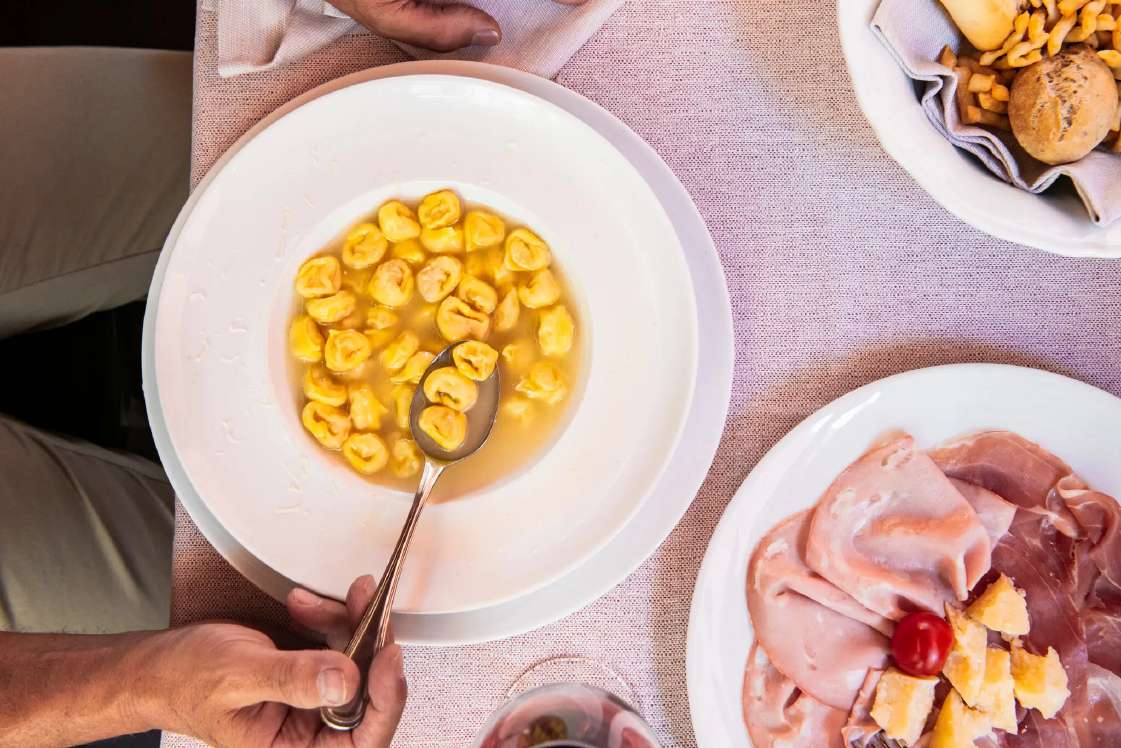
The pasta program reads like a greatest-hits of Emilia, executed without winks or deconstructions. The tortellini in brodo is the litmus test and it passes clean: tiny hand-folded tortellini floating in a clear, golden capon broth — the broth doing the talking, the pasta just there to carry it. Tagliatelle al ragù comes al dente under a sauce with real identity, rich but not heavy. The wine list leans, as the name promises, into Sangiovese — a bottle of Colli Bolognesi rosso on the table is the correct move.
The verdict from the people who keep score: around 4.8 across thousands of reviews, a TripAdvisor Certificate of Excellence, and a top-15 ranking among more than two thousand Bologna restaurants. The New York Times made it a first stop after landing from Los Angeles — “a warm, wood-paneled restaurant on Vicolo del Falcone” — and never really explained why you’d go anywhere else first.
Stop two: Trattoria Da Me, for the ragù
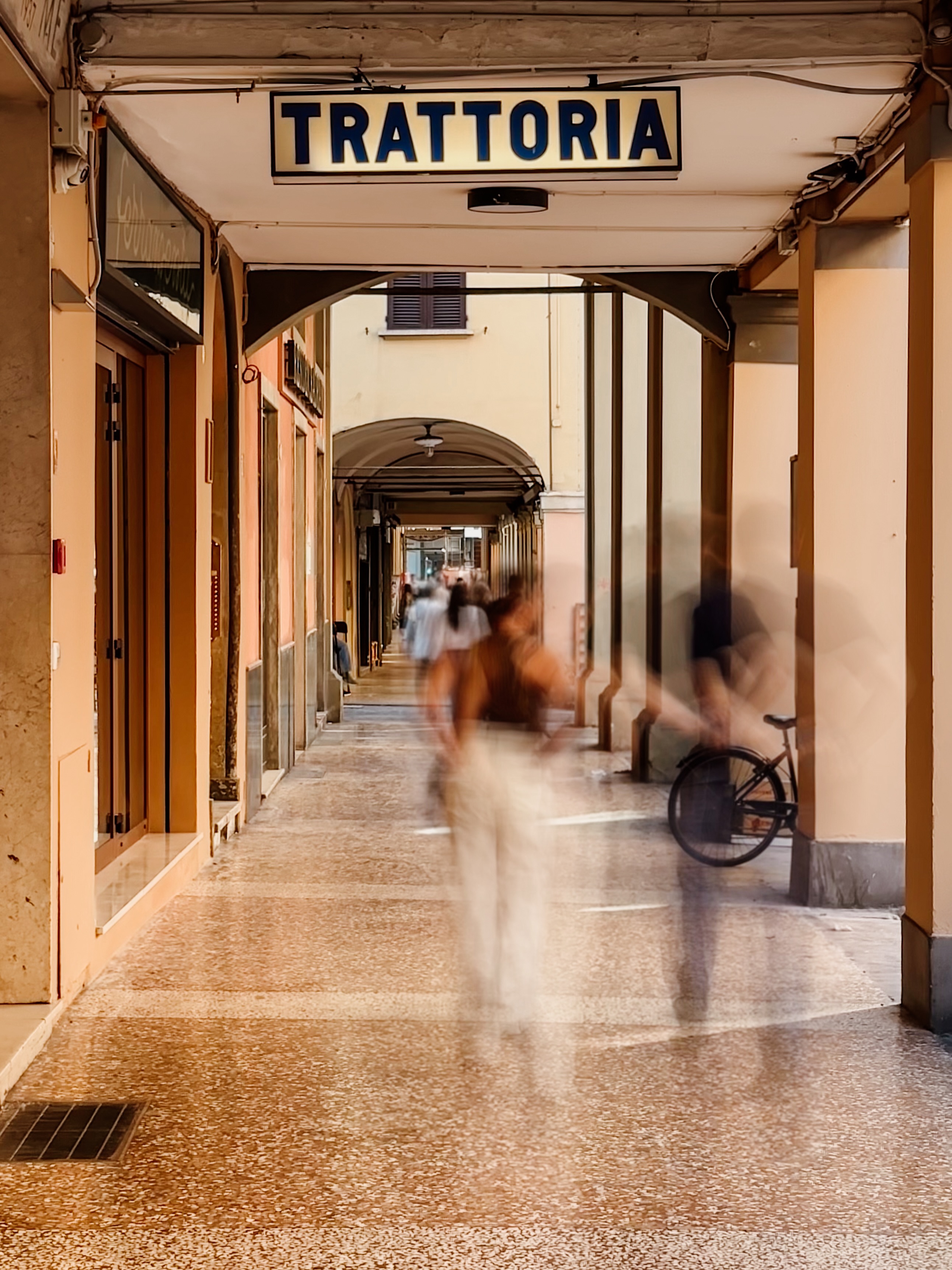
Twenty minutes on foot through the centro storico — west past Piazza Maggiore, into the Saragozza district — and you’re at Via San Felice 50/a, where Trattoria Da Me has been cooking since 1937. Order the tagliatelle al ragù and watch what arrives: wide, hand-cut egg ribbons — the pasta has chew, real chew, the kind that only comes from dough rolled that day — buried under a ragù so dense and dark it barely qualifies as a sauce. Beef and pork melted down over hours until the whole thing turns savory-sweet, finished with a snowfall of grated Parmigiano that goes straight into the steam. In a city where every other doorway claims the best ragù in Bologna, this is the plate people cross town for.
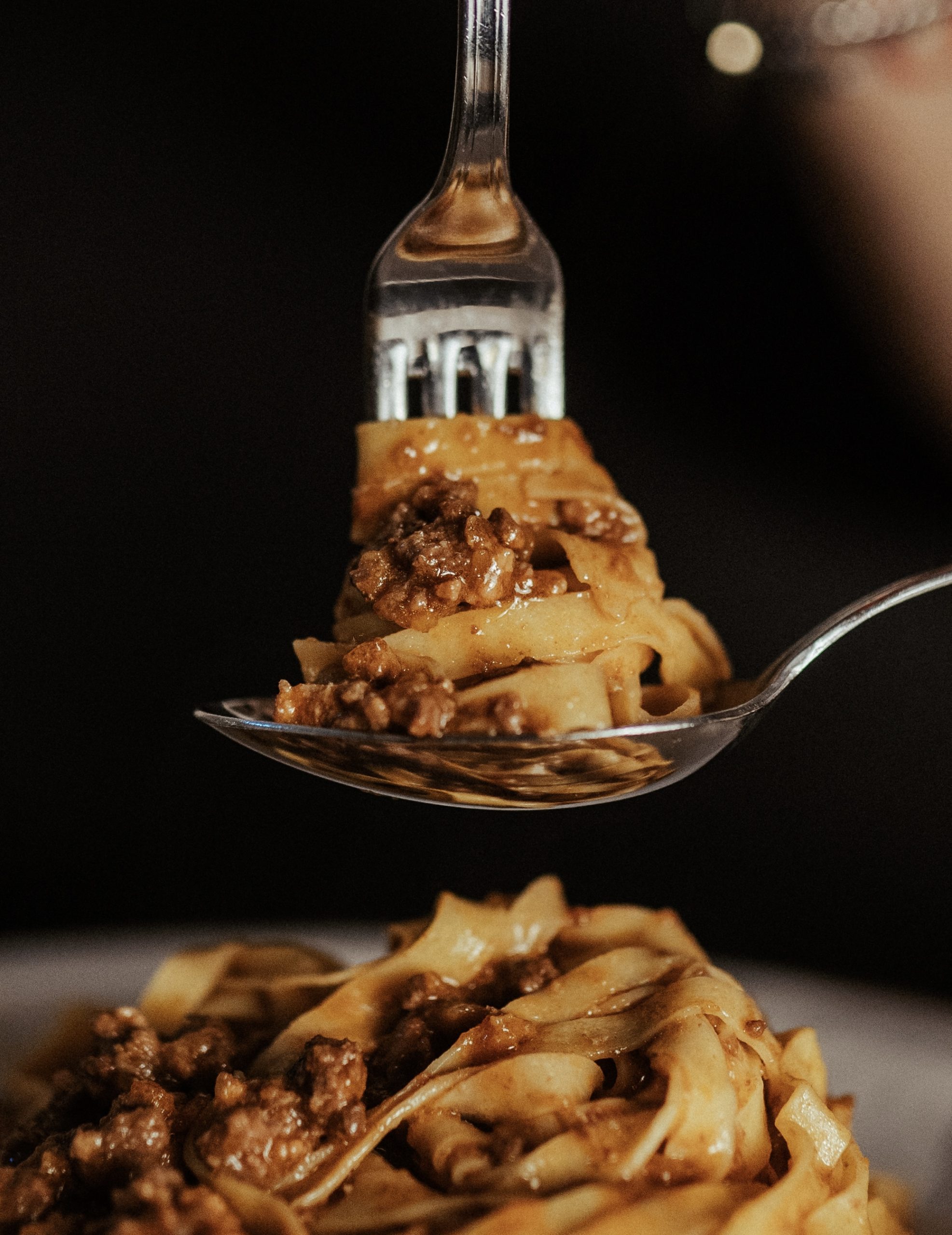
Up close, you can see why: the sauce isn’t coating the pasta so much as surrounding it — beef and pork cooked down until the fat turns sweet, the ribbons glossy underneath.
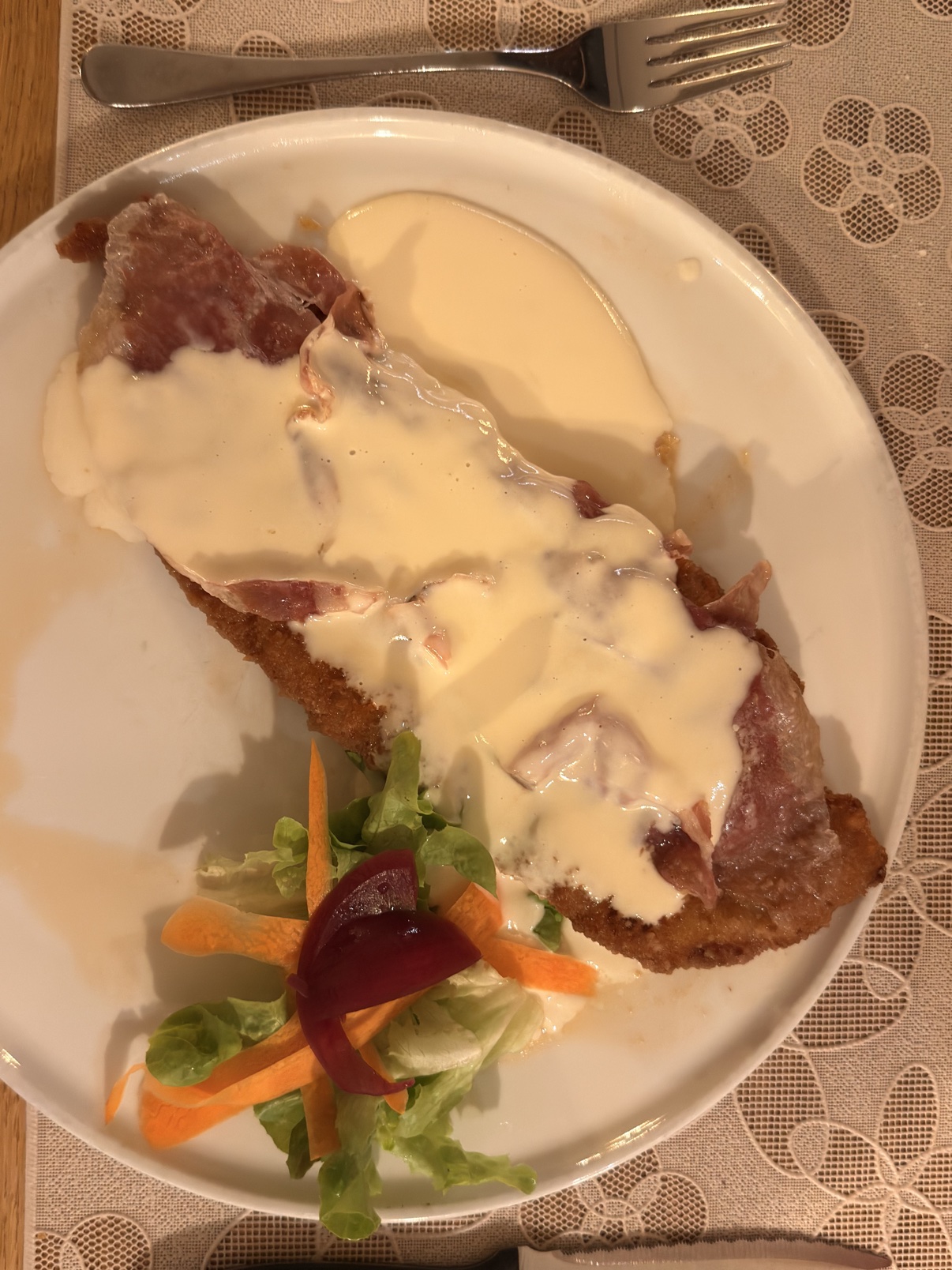
The cotoletta alla bolognese is the city’s other heavyweight, and Da Me’s is the full construction: a golden breaded veal cutlet, prosciutto tucked over it, the whole thing blanketed in a pale, molten cheese sauce. Rich the way Bologna is rich — unapologetic, butter-and-parm rich — with a little tangle of greens, carrot, and beet on the side that isn’t garnish so much as a palate reset you’ll be grateful for halfway through.
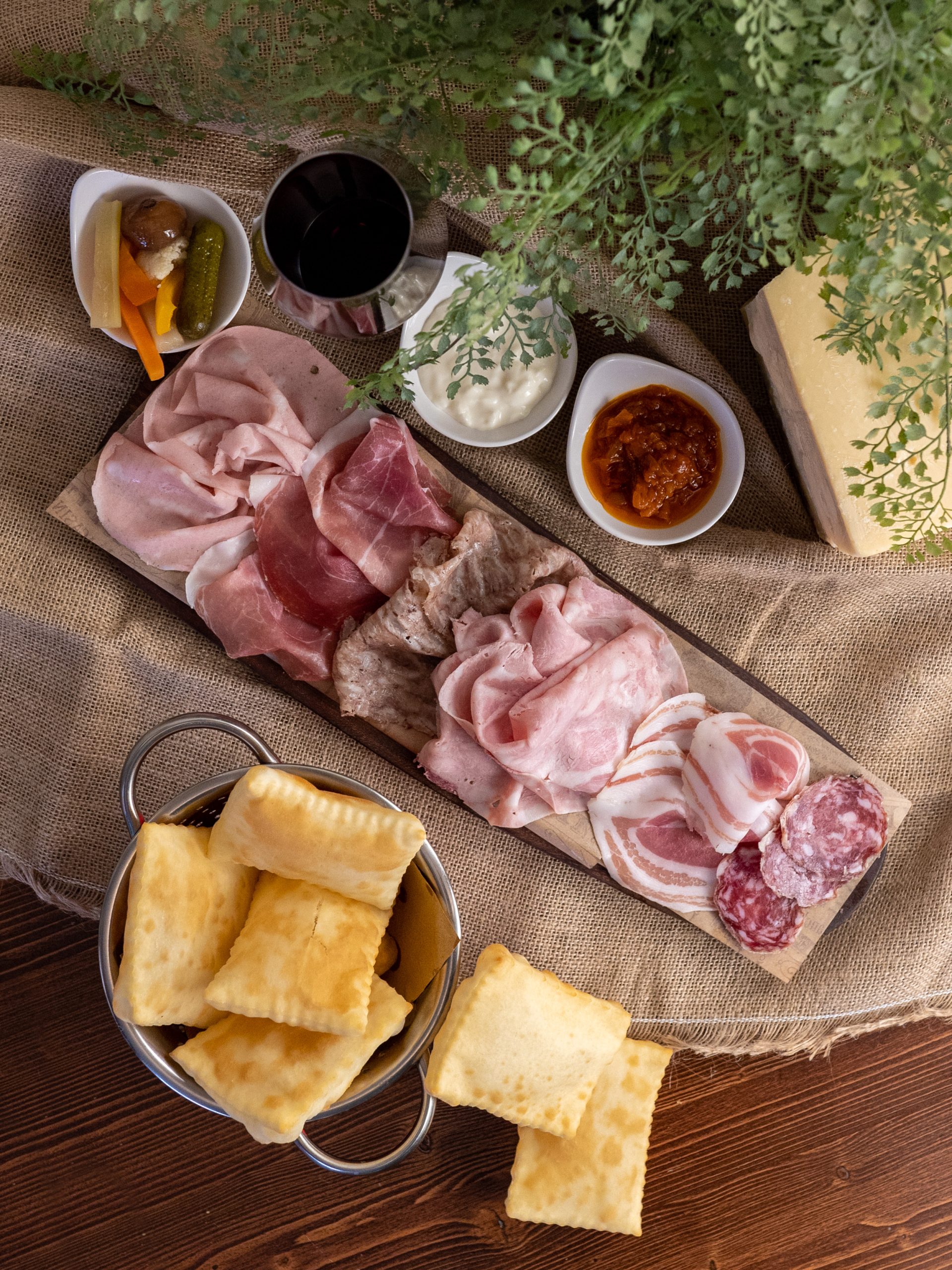
Before any of that, the basket lands: crescentine — also called tigelle — puffed, blistered, golden squares of fried flatbread served hot in a perforated metal basket. Tear one open and the steam does the talking. They’re the vehicle for the salumi, and they’re also the tell: a kitchen that fries its bread to order is a kitchen paying attention.
The story, as the family tells it, begins before the war. Nina and Danio — sister and brother — came to Bologna from the countryside of San Giovanni in Persiceto. Nina married Orazio, and together they opened an osteria: trebbiano and bardolino by the glass, a few plates of tagliatelle. That was 1937, by most accounts. Three generations later it’s the granddaughter, Chef Elisa, running the kitchen — the canon executed straight, plus the turns (a 4 Ristoranti win on Sky Uno put it on the international map) that keep it from being a period piece. There’s a pasta laboratory a few doors down at Via San Felice 52/a where you can pick up their handmade fresh pasta to take home.
One honest note: Da Me holds a 4.4-star Google rating across more than 5,000 reviews — the kind of number a famous room collects once the whole world starts showing up. We ate there anyway. Some rooms you judge by the crowd; this one you judge by the ragù.
Why this only works here
Here’s the part that matters. Both of these restaurants are cooking dishes whose recipes are, quite literally, registered documents — and every ingredient in those documents comes from the same small patch of the Po Valley.
The ragù first. On October 17, 1982, the Accademia Italiana della Cucina deposited the official recipe for ragù alla bolognese with the Bologna Chamber of Commerce, in the Palazzo della Mercanzia: beef cut from the plate, pancetta, carrot, celery, onion, tomato, wine, milk — simmered about two hours, no garlic in sight. (The Academy updated the text in April 2023 after a formal study committee; the bones didn’t change.) The tagliatelle it goes on is regulated too: 8 millimeters wide after cooking, deposited in 1972, reproduced as a golden sample measuring exactly 1/12,270th of the height of the Asinelli Tower.
The lasagna is registered as well. On May 28, 2003, the Academy certified lasagne verdi alla bolognese and registered it with the Chamber of Commerce: a kilo of traditional ragù, 400 grams of Parmigiano-Reggiano grated at the last moment, béchamel of flour, milk, butter, and nutmeg — and green pasta made from flour, eggs, and spinach. Note what’s missing: no ricotta, no mozzarella, no shortcuts. That’s the law of the dish, and it’s what Al Sangiovese’s crust is built on.
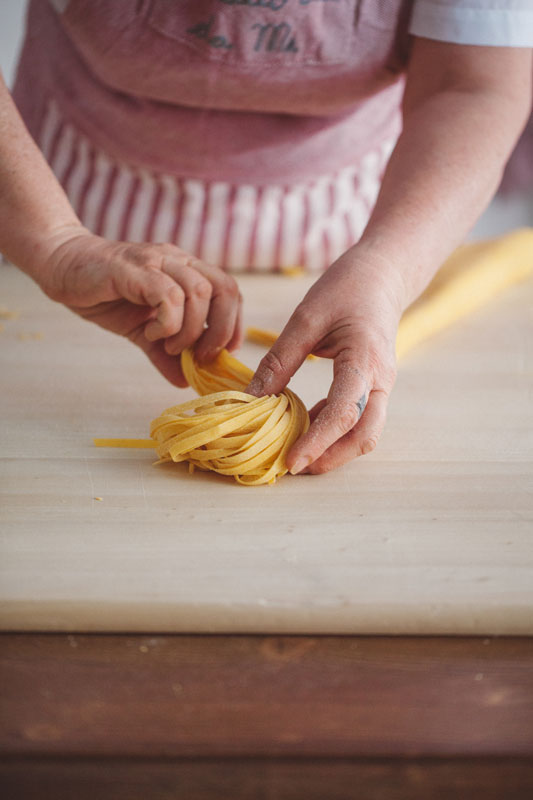
Then there’s the pasta itself, which is a person. The sfoglina — azdora in Bolognese dialect — is the woman who rolls sfoglia by hand with a meter-long mattarello on a wooden board, flour and eggs and nothing else. The old Bolognese test: lift the sheet to the light, and if you can see the Sanctuary of the Madonna di San Luca through it, the sfoglia is right. That translucent, porous sheet is what ragù clings to — dried pasta can’t do it, machine pasta can’t quite do it. Every ribbon at Da Me and every lasagna layer at Sangiovese starts with that sheet.
And the cheese that finishes both plates can only be made in one place. Parmigiano-Reggiano DOP may be produced exclusively in the provinces of Parma, Reggio Emilia, Modena, Bologna west of the Reno, and Mantua south of the Po — from raw cow’s milk, rennet, and salt, aged a minimum of twelve months, a method essentially unchanged for nine centuries. The milk itself is the terroir: cows fed on the forage of this plain, no additives permitted, every wheel inspected before it earns the name.
The pork runs just as deep. Mortadella Bologna carries IGP protection with roots back to at least the sixteenth century; it’s the noble cuts and throat fat of the pig, the same animal that gives the pancetta in the ragù and the prosciutto on the cotoletta. Bologna’s nickname is la grassa — the fat one — and it’s not an insult. It’s a description of an agricultural plain that has fed this cooking since the Romans.
That’s the argument both rooms are making, plate after plate: the lasagna and the ragù aren’t recipes you can lift out of Bologna. They’re the endpoint of a supply chain about a hundred kilometers wide — the cheese, the pork, the eggs, the hands that roll the sfoglia. Cook them anywhere else and you’re doing an impression. Here, it’s just dinner.
The evening, planned
Do Sangiovese for lunch and Da Me for dinner, or the reverse — the walk between them is the digestivo. Al Sangiovese: Vicolo del Falcone 2, Monday–Saturday 12:15–2:30 and 7:00–10:30, closed Sunday; the room is small, so book. Trattoria Da Me: Via San Felice 50/a, Tuesday–Sunday 12:30–2:30 and 7:30–10:00, closed Monday, +39 051 555486; reservation-only at peak, walk-ins turned away.
Order the lasagna where the crust is the point. Order the ragù where the ragù is the whole argument. Finish with the espresso — proper crema, the correct ending — and walk it off through the porticoes. That’s Bologna.
Like this story?
Get The Pass in your inbox every Friday — free.
Questions, answered
Which Bologna restaurant has the best lasagna?
Al Sangiovese on Vicolo del Falcone is the lasagna order — square-cut, with a deeply browned gratinato crust, built on the certified lasagne verdi alla bolognese formula of ragù, béchamel, spinach pasta, and Parmigiano-Reggiano. Trattoria Da Me on Via San Felice is the ragù order — tagliatelle al ragù under a dense, slow-cooked sauce.
How far apart are Trattoria Da Me and Al Sangiovese?
About a twenty-minute walk through Bologna's historic center — Da Me is on Via San Felice west of the center, Al Sangiovese on Vicolo del Falcone in the Santo Stefano district. Both sit roughly ten minutes on foot from Piazza Maggiore, so dinner at one and a stroll past the other is an easy evening.
What makes ragù alla bolognese different from other meat sauces?
It's a legally registered recipe. The Accademia Italiana della Cucina deposited the official ragù alla bolognese recipe with the Bologna Chamber of Commerce on October 17, 1982 (updated in 2023): beef, pancetta, carrot, celery, onion, tomato, wine, and milk — no garlic, no herbs beyond salt and pepper. It's served with tagliatelle, never spaghetti.
What is a sfoglina?
A sfoglina — azdora in Bolognese dialect — is the woman who rolls sfoglia, the fresh egg-pasta sheet, by hand with a long mattarello rolling pin on a wooden board. The Bolognese test of a good sfoglia: hold it to the light and you should see the Sanctuary of the Madonna di San Luca through it.
Do I need reservations at Al Sangiovese and Trattoria Da Me?
Yes, at both. Al Sangiovese (Mon–Sat 12:15–2:30 / 7:00–10:30, closed Sunday) is a small room with no double seatings — reservations are close to mandatory. Trattoria Da Me (Tue–Sun 12:30–2:30 / 7:30–10:00, closed Monday) runs reservation-only at peak and has turned away walk-ins.